Lab-Grown Brain Organoids Unlock New Insights for Personalized Psychiatric Treatment
December 22, 2025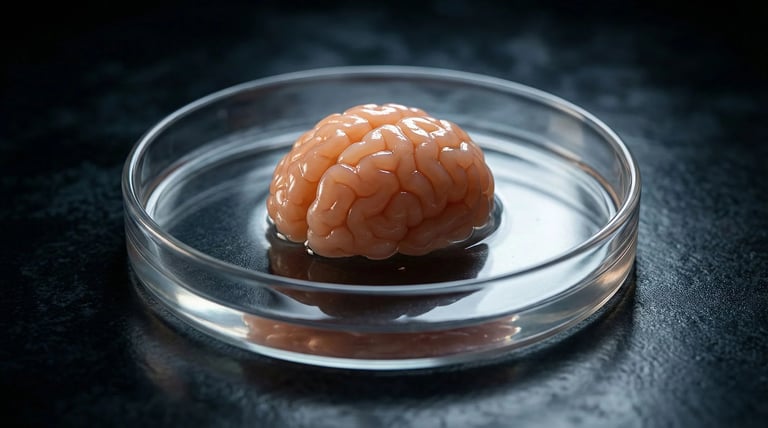

Scientists used patient-derived, lab-grown brain organoids to study neural signaling differences associated with psychiatric conditions, including schizophrenia and bipolar disorder, by reprogramming blood and skin cells into iPSC-derived organoids that resemble the prefrontal cortex and contain diverse neural cell types and myelin.
The study, published in APL Bioengineering, identifies disease-specific neural signaling patterns through machine learning analysis of organoid electrophysiology, achieving 83 percent accuracy in identifying disease origin, which rises to 92 percent with additional electrical stimulation.
While promising, the work is an early testbed toward personalized therapies and requires broader validation with more patient samples and drug testing before clinical translation.
Researchers plan to expand collaborations to recruit more patient samples and test various drug concentrations on organoids to identify treatments that normalize neural network activity.
The article notes that conventional psychiatric diagnoses rely heavily on clinical judgment, and organoid-based approaches could eventually improve diagnostic precision and treatment efficiency.
Machine learning analyzed the organoids’ electrical activity to reveal disorder-specific firing patterns that serve as biomarkers, with initial accuracy of 83 percent and improved performance after stimulation.
The research was published in APL Bioengineering and funded by NIH grants R01MH113858, K08MH086846, and R01NS133965.
Clinically, the work points toward earlier, more personalized psychiatric treatment by testing drug responses on organoids, potentially reducing trial-and-error prescribing and informing dosing for schizophrenia and bipolar disorder.
The study is detailed in the article ‘Machine learning-enabled detection of electrophysiological signatures in iPSC-derived models of schizophrenia and bipolar disorder,’ with DOI 10.1063/5.0250559, published in 2025.
The project analyzed organoids from 12 individuals and involved Johns Hopkins Medicine for sample collection and drug-response testing, illustrating a collaborative approach.
Researchers envision using patient-derived organoids as a testbed for drug efficacy and dosing, linking organoid activity to clinical relevance and moving toward individualized therapy with initial studies conducted on 12 patients.
Organoid activity was recorded on microchips with multi-electrode arrays, enabling a miniature EEG-like view of network development and electrophysiological signaling.
Summary based on 2 sources
Get a daily email with more Science stories
Sources

SciTechDaily • Dec 21, 2025
Scientists Discover Neural Basis of Schizophrenia and Bipolar Disorder
SciTechDaily • Dec 21, 2025
Scientists Discover Neural Basis of Schizophrenia and Bipolar Disorder