Victoria Eyes $840M Desalination Plant Upgrade Amid Growing Water Demands, AI Impact
December 29, 2025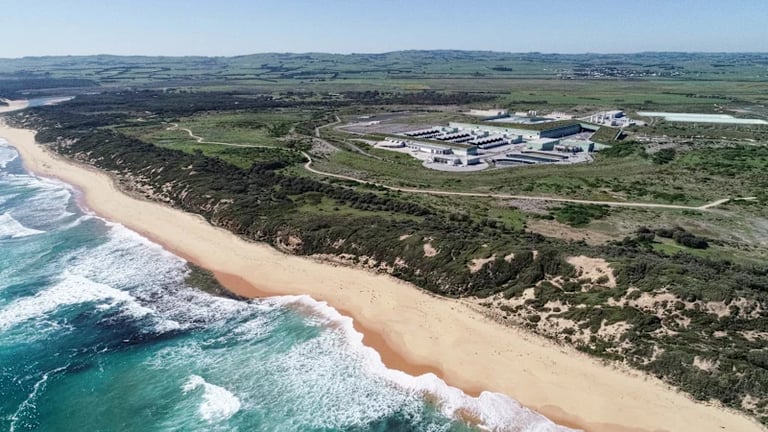

A government water security taskforce is studying the expansion as part of long-term supply options, prompted by population growth, declining rainfall, and increased data-centre consumption that could strain current plant performance.
Even with a 50 gigalitre expansion, desalination would cover roughly 38 percent of Melbourne’s total urban water demand by 2035, down from an assumed 42 percent if the plant were fully utilized from the start.
Separately, a second Victorian plant’s cost and feasibility are under consideration, with external estimates for a potential south-east Queensland plant around $5 billion, though the Victorian price is not specified in the report.
Oxford Economics Australia warns that data-centre growth driven by AI and cloud computing could significantly increase urban water use, potentially stressing supply as cooling needs grow and rainfall remains volatile, with NSW projections suggesting data-centre demand could reach up to a quarter of water use by 2035.
The Victorian government is signaling ongoing water security work across efficiency, desalination, recycled water, and stormwater harvesting, while noting there is no immediate expansion plan for Wonthaggi.
Nationally, about 11 desalination projects are planned to meet rising non-rainfall water needs, with discussions also considering a second Victorian desalination facility in Melbourne’s western suburbs.
Victoria is weighing an upgrade to the Wonthaggi desalination plant at an estimated cost of about $840 million to add 50 gigalitres of capacity, with work potentially starting between 2025 and 2030 and finishing by 2034 to bolster Melbourne’s water security in a drying climate and rising data-centre cooling demand.
Summary based on 1 source
Get a daily email with more Australia News stories
Source
The Age • Dec 29, 2025
$840m desal expansion tipped as Melbourne faces AI water drain