Mélenchon Defends LFI Against Islamist Links in Parliamentary Inquiry, Reaffirms Commitment to Secularism
December 6, 2025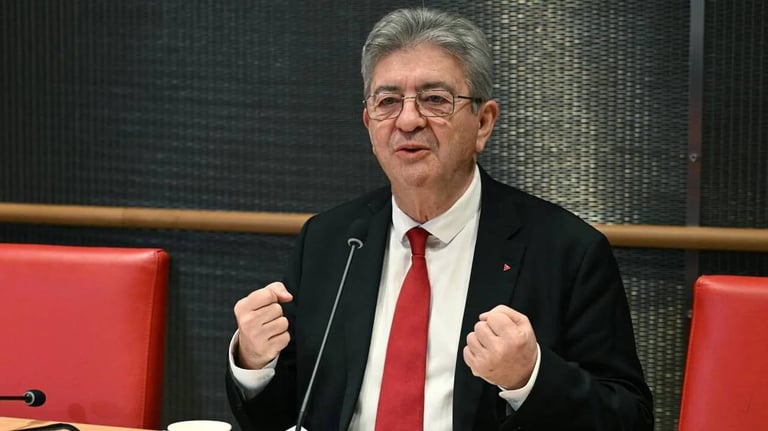

Jean-Luc Mélenchon testified before a parliamentary inquiry into links between political movements and Islamists, insisting La France insoumise (LFI) will never tolerate religious entrenchment in politics and that the movement has been cleared by the inquiry’s work.
He argued the inquiry has produced documents exonerating LFI, noting all intelligence service officials interviewed indicated no link between LFI and Islamist groups.
Mélenchon stressed that LFI will never tolerate religio-political entrenchment or entrism and reiterated the inquiry’s findings as supportive of the movement.
He criticized labeling critics as antisemitic, describing such framing as unjust and pointing to his past actions aiding Jews leaving the USSR to illustrate his stance.
He warned against politicians regulating religious practice or banning visible expressions of faith, arguing laïcité is a national principle upheld by the state, not by streets or individuals.
Mélenchon denied sympathy for the Iranian regime, rejected doctrinaire theocratic regimes, and suggested the inquiry targets broader concerns about religion in politics rather than specific groups.
Regarding accusations about Islamists at pro-Palestinian demonstrations, he redirected questions to another deputy and noted that supporters did not press him on Islamist presence at those protests.
He framed state laïcité as foundational for LFI and acknowledged Islamist threats among a range of others facing the country.
Mélenchon acknowledged a perceived Islamist threat within broader global dynamics and warned of external powers attempting to influence France, while reaffirming LFI’s stance against religious entrenchment and theocratic regimes.
He underscored that laïcité is a state matter above street actions and urged clear distinctions between Islam, Islamism, and terrorism; the commission’s evidence, he said, absolves LFI.
He reiterated the founding role of state secularism, urged separating Islam from Islamism and Islamism from terrorism to avoid conflating distinct phenomena.
Mélenchon pressed for a clear distinction among Islam, Islamism, and terrorism and claimed the inquiry’s findings exonerate his movement from ties to Islamists.
The inquiry’s leadership faced criticism over the absence of left-wing members, and the commission aims to conclude around December 10, with powers to compel testimony and conduct investigations.
He referenced Marine Le Pen’s antisemitism accusations and expressed frustration at repeatedly having to prove his innocence before inquisitors.
The commission director said the inquiry would not target a single party or individuals, and Mélenchon questioned why a broader range of witnesses hadn’t been consulted during hearings.
Mélenchon defended deputies including Rima Hassan, arguing that the party does not blur Islam with Islamism or Islamism with terrorism, and pushed back against criticisms aimed at individual members.
He asserted laïcité in France is a state matter, not something driven by street demonstrations, and noted LFI’s antiracist and secular foundations in its training, with the state enforcing laïcité.
Overall, Mélenchon cast the inquiry as a political and constitutional debate on laïcité, religious freedom, and the proper boundaries between church and state.
He cited the report on the Brotherhood infiltration, noting no national-scale strategy or plans to islamize were found in the movement’s doctrine.
He stated there is no evidence of a national-level strategy to influence political parties by the Muslim Brotherhood report.
In defending laïcité, he called for protecting religious freedom under the 1905 law and warned against prohibiting headscarves or regulating religious practices in public spaces.
Mélenchon reiterated no sympathy for the Iranian regime and condemned all theocratic regimes.
Summary based on 4 sources