New Slack-Integrated AI Beta by Claude Code Transforms Developer Workflows with Seamless Coding in Chat
December 8, 2025

Claude Code is rolling out a Slack-integrated beta that lets developers tag @Claude in threads to generate code, track progress, and share PR links without leaving chat, turning Slack into a hands-on coding workspace.
The beta is framed as a research preview designed to accelerate developer workflows by routing coding tasks through simple channel mentions, expanding Claude’s Slack capabilities.
Anthropic positions Slack as an agentic hub where AI meets workplace context, suggesting the dominant AI tool in Slack could shape how software teams work.
The beta signals a broader rollout with planned documentation and refinements; success will hinge on enterprise reliability, security, and maintaining a balance between productivity gains and potential skill erosion.
Key considerations include securing AI access to code repos, QA for AI-generated code in production, adoption challenges, and ensuring the integration aligns with existing pipelines and tooling.
Claude Opus 4.5 underpins the expansion, with Anthropic claiming stronger coding performance and favorable benchmarks versus competitors, while acknowledging ongoing safety and security concerns such as a notable malware-generation refusal rate.
Pricing and adoption considerations suggest potential expansion beyond individuals to roles like product managers and QA, depending on how Slack identities and channel scopes affect access.
The rollout comes amid growing competition in AI coding tools, with differentiation expected from deeper integrations and distribution rather than model capability alone.
Success metrics include time-to-first-PR from chat requests, review latency, rework rates, and overall cycle time, focusing on reducing context switching rather than just more code.
Real-world use cases include automating API integrations and reducing development time, with calls for deeper version control integration and iterative improvement from beta feedback.
Teams are advised to start with non-critical projects, set AI-use guidelines, enforce robust code reviews, train on prompting and context, and monitor productivity to gauge velocity impact.
Industry implications point to a shift toward human oversight of AI-generated code, potential democratization of coding within teams, and the need for integration with GitHub or similar platforms for larger projects.
Summary based on 8 sources
Get a daily email with more Startups stories
Sources

The Verge • Dec 8, 2025
Anthropic is bringing Claude Code to Slack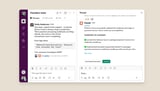
TechCrunch • Dec 8, 2025
Claude Code is coming to Slack, and that’s a bigger deal than it sounds
VentureBeat • Dec 8, 2025
Anthropic's Claude Code can now read your Slack messages and write code for you
SiliconANGLE • Dec 8, 2025
Agentic coding comes to Slack as Anthropic launches Claude Code integration - SiliconANGLE