New Report Sets Life-Detection as Top Goal for Crewed Mars Mission, Outlines 11 Scientific Objectives
December 9, 2025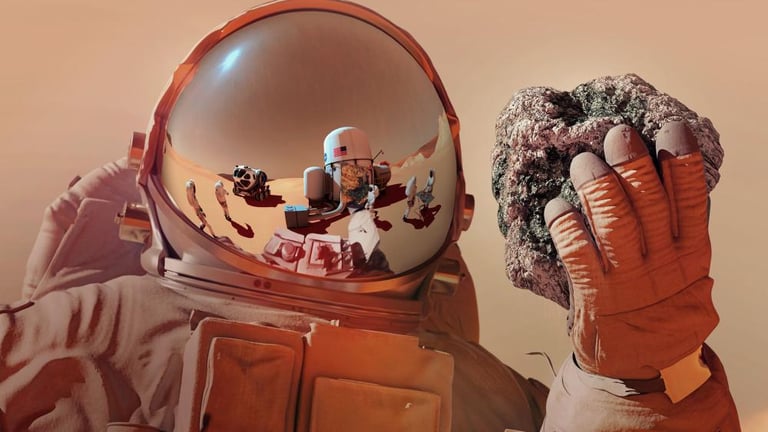

A new National Academies report outlines 11 science objectives for a crewed Mars campaign, placing life-detection at the top and outlining studies of water and carbon dioxide cycles, geology, human health, dust storms, resources, and the potential impact on DNA, reproduction, microbes, and Earth‑microbe interactions.
NASA collaborates with the International Committee on Space Research to refine planetary protection plans, seeking to allow human landings in selected regions while keeping other areas pristine.
The report argues that human presence on Mars could be pivotal, emphasizing the need for both human and robotic missions to advance scientific understanding of Mars, life’s potential, and planetary history.
Penn State affiliates contributed to the report, including input on astrobiology, science panels, and independent review.
The report notes that NASA funding and political shifts could affect feasibility and timing, and remains agnostic about specific technologies and schedules.
Penn State figures such as James Pawelczyk and Andrew Read underscore Mars science, planetary protection, and crew health as central to the mission concept.
The report omits concrete exploration zones, crew health protocols, planetary protection strategies, and specific mission architectures or timelines.
Moon-to-Mars progression is acknowledged as a precursor, with an emphasis that Mars missions are not imminent.
Co-chairs Linda T. Elkins-Tanton and Dava Newman highlight the historical significance of a first manned Mars landing and the breadth of knowledge to be gained.
A 300-sol phase envisions extended exploration, deep drilling, atmospheric measurements, and lab work across multiple sites, with preplaced infrastructure to support long-duration science and iterative adjustments.
Campaigns specify required equipment and crew roles, noting strengths and weaknesses in meeting the scientific goals.
A companion in-space science document will define priorities for in-space phases, with a call to draw on hundreds of subject-matter experts.
Summary based on 11 sources
Get a daily email with more Science stories
Sources

Ars Technica • Dec 9, 2025
In a major new report, scientists build rationale for sending astronauts to Mars
Scientific American • Dec 9, 2025
Human Missions to Mars Must Search for Alien Life, New Report Finds
Phys.org • Dec 9, 2025
New report outlines science priorities for human Mars exploration
Space • Dec 9, 2025
1st human missions to Mars should hunt for signs of life, report says