Researchers Revive 46,000-Year-Old Worm from Siberian Permafrost, Unlocking Cryptobiosis Secrets
February 26, 2025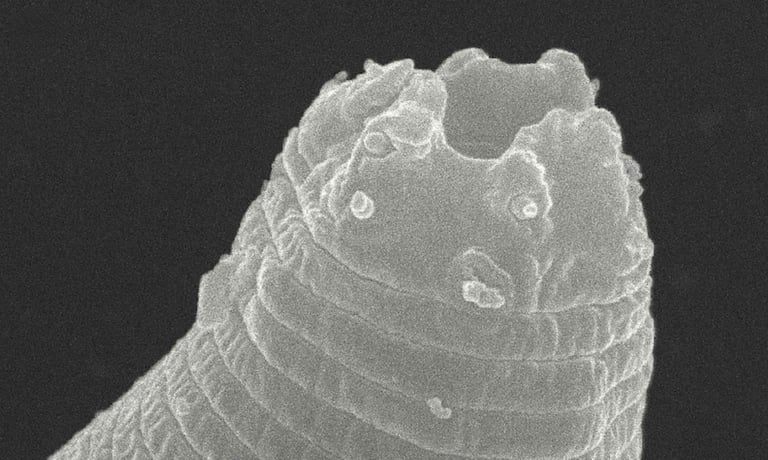

Researchers have successfully revived a tiny worm, identified as Panagrolaimus kolymaensis, which had been frozen for approximately 46,000 years in Siberian permafrost, demonstrating the remarkable resilience of life.
This worm entered a state known as cryptobiosis, where its metabolic activity halted, allowing it to survive extreme environmental conditions.
The specimen was discovered about 40 yards underground, preserved in a state of cryptobiosis, and was able to resume normal activity and reproduce after thawing.
The findings were published in PLOS Genetics, emphasizing the potential for further studies on cryptobiotic organisms and ancient permafrost samples.
Understanding the cryptobiotic process could lead to advancements in various fields, including organ transplants, space exploration, and biotechnology, significantly impacting global medical practices and research.
The worm possesses specialized proteins that act as biological antifreeze, suggesting potential applications for human organ preservation and long-term space travel.
Genetic analysis revealed that this newly identified species shares similarities with the well-studied nematode Caenorhabditis elegans, but also exhibits distinct survival traits.
While other organisms like tardigrades and brine shrimp also exhibit cryptobiosis, the longevity of this nematode's frozen state is unprecedented.
The Siberian permafrost serves as a natural time capsule, with radiocarbon dating confirming the worm's age, linking it to the Ice Age alongside woolly mammoths and early humans.
Dr. Philipp Schiffer, the study's lead researcher from the University of Cologne, expressed amazement at the worm's ability to resume life after such an extended dormant period, challenging previous assumptions about biological survival limits.
The research opens up possibilities for understanding survival strategies in other extreme environments, such as Mars or the icy moons of Saturn.
Future research may focus on isolating the genes that enable the worm's cells to withstand freezing, which could have applications in food preservation and biomedicine.
Summary based on 2 sources
Get a daily email with more Science stories
Sources
Earth.com • Feb 24, 2025
Frozen worm comes back to life after 46,000 years
Indian Defence Review • Feb 26, 2025
Frozen in Time: Scientists Revive a 46,000-Year-Old Worm From Siberian Permafrost