Venomous Romance: Male Blue-Lined Octopuses Use Toxin to Survive Mating Rituals
March 10, 2025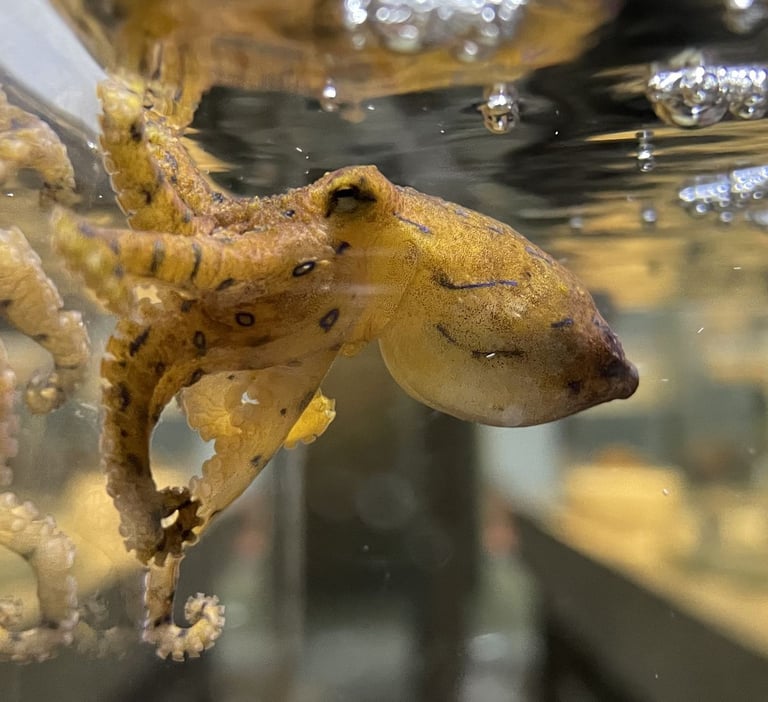

The blue-lined octopus, a small but highly venomous cephalopod found in shallow reefs and tide pools, is known for its potent neurotoxin, tetrodotoxin (TTX), which it uses for hunting and self-defense.
The study revealed that males possess significantly larger venom glands than females, which may be an adaptation for this reproductive strategy.
Sexual cannibalism is common in cephalopods, with females often consuming their mates, particularly during the egg-brooding phase when they do not feed for about six weeks.
The research was published in the journal Current Biology, shedding light on this unique mating behavior and its implications for understanding cephalopod reproduction.
During mating, the male's respiration rate increases, allowing him to remain alert while the female is incapacitated by the toxin.
Mating sessions last between 40 and 75 minutes, with the effects of TTX causing females to stop breathing after about eight minutes.
After mating, females recover and exhibit normal behavior, although they have open wounds from the males' bites, and they may lay eggs within 3 to 29 days.
Males must carefully control the amount of venom injected, as females are resistant to TTX but can still be affected.
These octopuses are easily recognizable by their striking electric blue lines that appear when threatened, serving as a warning to potential predators.
In a fascinating new study, researchers discovered that male blue-lined octopuses inject females with venom during mating to prevent being eaten.
TTX is produced by symbiotic bacteria and stored in the male's salivary glands, making these octopuses among the most dangerous marine animals.
This unique mating behavior highlights a significant aspect of reproductive strategies in cephalopods, where the risk of predation by females is a major concern.
Summary based on 6 sources
Get a daily email with more Science stories
Sources

The Guardian • Mar 11, 2025
Male blue-lined octopuses inject females with venom during sex so she doesn’t eat him, study shows
Nature • Mar 11, 2025
Bad romance: male octopuses inject deadly venom into their mates
Popular Science • Mar 10, 2025
Male octopus poisons its mate to avoid becoming post-sex snack
Smithsonian Magazine • Mar 11, 2025
These Male Octopuses Use Venom to Subdue Female Mates—and Avoid Being Eaten After Sex