Chang'e-6 Returns with Moon's Oldest Samples, Reveals SPA Basin's Ancient Secrets
March 24, 2025


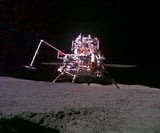
The Chang'e-6 probe, launched in early May 2024, successfully returned to Earth with nearly 1,935 grams of lunar material on June 25, 2024.
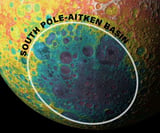
This mission marked a significant milestone as it provided the first direct rock samples from the Moon's South Pole–Aitken (SPA) basin, enabling detailed analysis of its geological materials.
Researchers meticulously examined around 1,600 fragments from the lunar soil samples, isolating 20 norite clasts that exhibited textures and mineral compositions consistent with an impact origin.
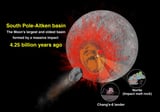
Using lead-lead isotopic dating on zirconium-bearing minerals within these clasts, the team identified two significant ancient impact events, one occurring at 4.25 billion years and another at 3.87 billion years.
Prior to this research, the precise age of the SPA basin was largely unknown, with estimates varying widely, complicating its significance in lunar and planetary evolution.
Previous age estimates for the SPA basin ranged from 4.26 to 4.35 billion years, primarily based on indirect methods, highlighting the importance of the Chang'e-6 mission's contributions.
The analysis of norite clasts from the samples indicated they crystallized from a common impact melt sheet generated by the SPA impact, confirming the basin's formation age.
Located on the far side of the Moon, the SPA basin is the largest and oldest known impact crater, believed to have formed during a period of intense asteroid bombardment that shaped the early solar system.
Recent geological studies led by Prof. Chen Yi have established the formation of the SPA basin at approximately 4.25 billion years ago, a significant finding that clarifies its role in lunar history.
The comprehensive study, published in *National Science Review* on March 21, 2025, underscores the importance of direct sample analysis in advancing our knowledge of lunar geology.
This research represents a significant advancement in understanding the Moon's geological history and the broader context of solar system formation.
These findings not only refine the lunar cratering chronology but also enhance our understanding of the dynamic processes that shaped the early solar system.
Summary based on 4 sources
Get a daily email with more World News stories
Sources
Phys.org • Mar 21, 2025
Chang'e-6 samples suggest 4.25-billion-year-old impact formed moon's South Pole–Aitken basin