Martian Dust: A Toxic Threat to Astronauts' Health in Future Mars Missions
March 26, 2025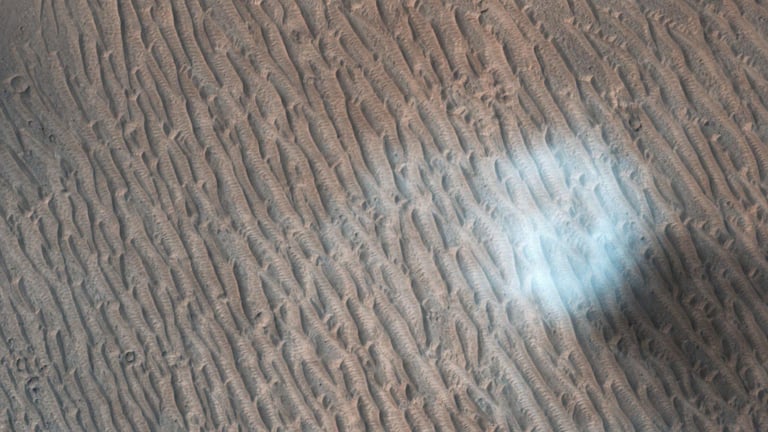

Collaborative efforts among medical, engineering, and scientific fields are crucial for addressing the dust problem and ensuring astronaut safety.
NASA's Perseverance rover is currently testing materials for future Martian spacesuits under extreme conditions to enhance their durability against dust and radiation.
Other harmful materials in the dust include chromium, cadmium, and arsenic, which are linked to gastrointestinal inflammation, kidney disease, and cancer, respectively.
Communication delays of approximately 40 minutes between Mars and Earth will hinder remote medical support, making it vital to limit exposure to Martian dust.
In January 2025, President Donald Trump expressed ambitions to plant the American flag on Mars and beyond.
Research indicates that toxic dust on Mars poses serious health risks for astronauts during potential missions to the planet.
Julia Cartwright from the University of Leicester compares Martian dust to asbestos due to its sharp-edged particles that can irritate human tissues and lead to long-term lung damage.
Cartwright also highlights the challenges of air filtration, including the need for sufficient replacement filters to manage harmful compounds like chromium and arsenic.
Justin Wang, a co-author of the study, emphasized that while Martian dust poses health hazards, they can be managed with proper precautions.
Mars' low gravity and high cosmic radiation further stress the human body, as the planet lacks a protective magnetic field like Earth's.
Natalya Zavina-James from the UK Space Agency highlights the ethical implications of astronaut health in Mars exploration, emphasizing the need for thorough consideration before crewed missions.
To mitigate dust exposure, researchers recommend implementing dust filtration, cleaning cabins, and using electrostatic repulsion devices during missions to Mars.
Summary based on 6 sources
Get a daily email with more Science stories
Sources

The Guardian • Mar 26, 2025
Martian dust may pose health risk to humans exploring red planet, study finds
CNN • Mar 26, 2025
Toxic dust on Mars would present serious hazard for astronauts | CNN
ExtremeTech • Mar 28, 2025
Toxic Mars Dust Adds Another Health Risk to Astronauts' List
WAAY 31 News • Mar 26, 2025
Toxic dust on Mars would present serious hazard for astronauts