Discovery of Quina Scrapers in China Challenges Middle Paleolithic Tool Assumptions
March 31, 2025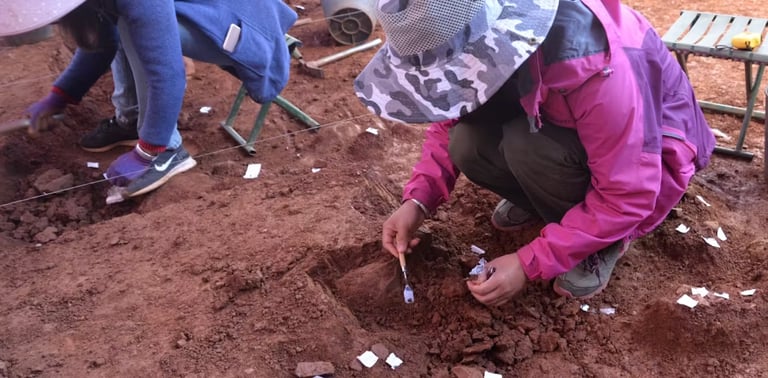

A recent study published in the Proceedings of the National Academy of Sciences has revealed the discovery of Quina scrapers, a type of Middle Paleolithic stone tool, in southwest China, suggesting that ancient East Asians were innovating during this era, similar to their counterparts in Europe and the Middle East.
Previously, Quina scrapers were thought to be exclusive to Europe and the Middle East, leading to misconceptions about the technological capabilities of East Asians during the Middle Paleolithic.
The excavation at Longtan, where these tools were found, was led by researchers Hao Li and Qijun Ruan, and dating indicates that the artifacts are approximately 50,000 to 60,000 years old, aligning with their usage in Europe during the same period.
Analysis of the Longtan site revealed an environment similar to that of Quina sites in Europe, characterized by open forest-grassland and a cool, dry climate, which may have influenced the tool-making practices of the ancient inhabitants.
Microscopic studies of the Quina scrapers confirmed that they were used for scraping and cutting soft materials, as evidenced by distinct wear patterns.
The identity of the toolmakers remains a mystery, as no human remains or DNA were recovered, leaving open the possibility that they could have been modern humans, Neanderthals, Denisovans, or even an unidentified human species.
This discovery raises important questions about the origins of the Quina tools, specifically whether they were introduced by visitors from Europe or developed independently by local populations.
The study emphasizes the need for continued archaeological research in East Asia, as previous finds may have been overlooked due to narrow definitions based on European examples.
Overall, the findings challenge the prior belief that East Asians relied solely on basic tools during the Middle Paleolithic, indicating a more complex technological landscape in the region.
The Middle Paleolithic period, which lasted from approximately 250,000 to 30,000 years ago, marks significant developments in human technology and the emergence of modern humans.
The Quina scraper is characterized by its thick, asymmetrical design and durable cutting edge, making it ideal for processing animal remains and wood.
The research team utilized optical luminescence dating to accurately date the sediment layers containing the artifacts, providing a clearer timeline for their use.
Summary based on 2 sources