2024 Shatters Heat Records as Global Sea Ice Hits Historic Low, Urgent Climate Action Needed
March 6, 2025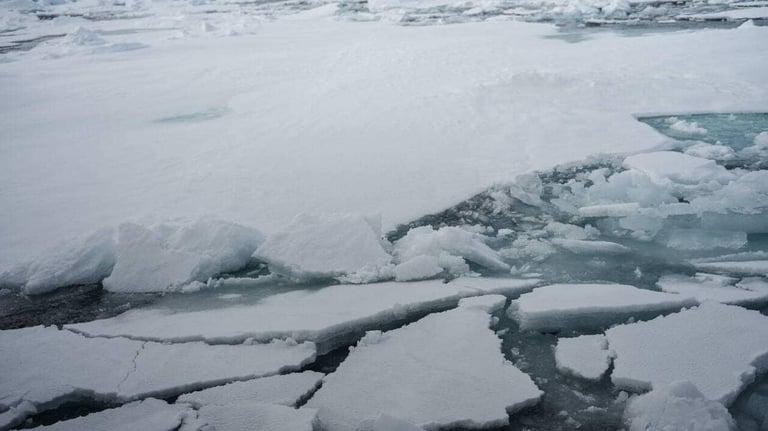


Warming oceans disrupt weather patterns worldwide, resulting in extreme weather events such as heat waves, potent storms, and extended droughts.
The UN warns that without drastic reductions in greenhouse gas emissions, global temperatures could rise above critical thresholds by the early 2030s.
The reduction in sea ice decreases the Earth's ability to reflect solar radiation, leading to more heat absorption and accelerating global warming.
Experts warn that if global temperatures rise above 2 degrees Celsius, the Arctic could experience ice-free summers, significantly impacting the environment and human civilization.
February was marked by significant climate events, including severe wildfires in Argentina and multiple cyclones affecting Southeast Africa and the South Pacific.
According to the Copernicus Climate Change Service, the Arctic sea ice extent was eight percent below the long-term average for February.
The planet has entered a third consecutive year of historically high temperatures, with 2024 confirmed as the hottest year on record, surpassing previous years.
The decline in Arctic sea ice poses serious threats to wildlife, including polar bears and seals, which depend on stable ice for hunting and breeding.
In February 2025, global sea ice extent around the Arctic and Antarctic reached a historic low, driven by ongoing high global temperatures.
The impacts of climate change threaten billions through increased wildfires, rising sea levels, and agricultural challenges, underscoring the urgency of addressing global warming.
Scientists attribute this unprecedented warming era to the combustion of fossil fuels, marking it as the warmest in at least 125,000 years.
Experts, including Samantha Burgess and Robert Larter, express serious concern regarding low ice levels and their implications for polar ecosystems and potential sea-level rise.
Summary based on 23 sources
Get a daily email with more World News stories
Sources

The Guardian • Mar 6, 2025
Global sea ice hit ‘all-time minimum’ in February, scientists say
The Guardian • Mar 7, 2025
Friday briefing: What a record drop in sea ice means for our planet
The Washington Post • Mar 6, 2025
Global sea ice cover hit a record low in February, researchers find
New Scientist • Mar 5, 2025
Global sea ice levels just hit a new record low