Tardigrade Protein Breakthrough: New Cancer Treatment Shields Healthy Cells from Radiation
March 6, 2025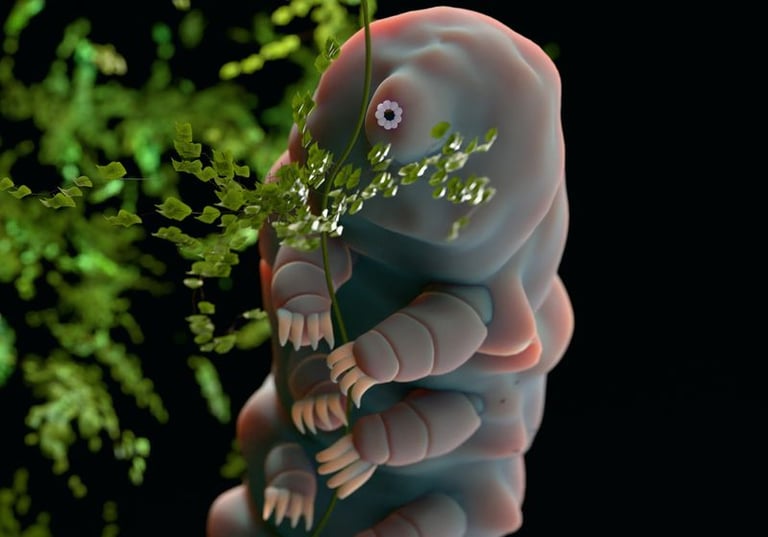

Researchers have made a groundbreaking discovery regarding Dsup, a protein produced by tardigrades, which protects DNA from radiation damage and could potentially enhance radiation therapy for cancer patients.
Tardigrades, known for their remarkable resilience, can survive radiation doses over 1,000 times greater than what is lethal for humans, prompting scientists to explore their unique biological mechanisms.
The evolutionary adaptations of tardigrades allow them to withstand radiation by utilizing Dsup to bind to DNA strands, effectively preventing damage.
A collaborative team from MIT, Brigham and Women’s Hospital, and the University of Iowa has developed a method to deliver Dsup messenger RNA (mRNA) encapsulated in nanoparticles to murine cells.
To optimize the delivery of mRNA to cells, researchers combined polymer and lipid components, successfully demonstrating protein expression post-injection.
The findings of this research were published in Nature Biomedical Engineering on February 25, 2025, highlighting the potential of Dsup in cancer treatment.
Subsequent experiments confirmed that nanoparticles carrying Dsup provided significant protection to oral and colonic cells from radiation damage, as evidenced by reduced double-stranded DNA damage markers.
Importantly, the mRNA therapy did not impede the radiation's ability to kill cancer cells in mice with oral cancer, suggesting broad applications for protecting healthy tissue from DNA damage.
In trials, when mice with oral cancer were injected with Dsup mRNA, the resulting Dsup protein significantly reduced radiation-induced DNA damage without affecting tumor growth.
Healthy mice treated with Dsup also exhibited reduced double-stranded DNA damage after radiation exposure, with no significant systemic effects observed.
If successful, this innovative research could benefit the 50 to 60% of cancer patients undergoing radiation therapy and may also protect astronauts from space radiation.
Plans are in motion to develop an improved version of Dsup that minimizes immune system reactions, and researchers are also exploring other radiation-resistant tardigrade species for additional insights.
Summary based on 2 sources
Get a daily email with more Science stories
Sources

Gizmodo • Feb 27, 2025
A Protein Borrowed From Tardigrades Could Give Us Radiation Body Armor
The Scientist Magazine • Mar 5, 2025
Tardigrade Protein Shields Mouse Cells from Radiation