Bile Acids: Gut Bacteria's New Role in Cancer Defense Unveiled by Study
April 15, 2025

A groundbreaking study published in the journal Cell on April 15, 2025, reveals that bile acids modified by gut microbiota can inhibit androgen receptor signaling and enhance immune responses against tumors.
The research team, including Dr. Chun-Jun Guo, Dr. David Artis, and Dr. Nicholas Collins, along with co-first authors Dr. Wen-Bing Jin and Dr. Leyi Xiao, identified over 50 new bile acid molecules that had not been previously recognized.
This study highlights the evolving relationship between humans and their gut microbiota, emphasizing the importance of considering microbial activity in the development of cancer treatments.
The findings suggest that gut-derived metabolites have the potential to significantly influence the outcomes of cancer therapies.
The research raises important questions about how diet affects bile acid production and the physiological effects of these bile acids in healthy individuals, indicating a need for further investigation.
Researchers are exploring the possibility of genetically engineering gut bacteria to better control the production of these beneficial bile acids and to fully understand their physiological effects.
Despite the promising findings, researchers remain cautious about the systemic effects of bile acids and the influence of dietary factors, highlighting the necessity for additional research.
Summary based on 7 sources
Get a daily email with more Science stories
Sources

ScienceDaily • Apr 15, 2025
Gut microbes release cancer-fighting bile acids that block hormone signals
EurekAlert! • Apr 15, 2025
Gut microbes release cancer-fighting bile acids that block hormone signals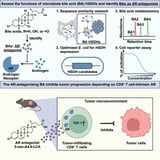
Medical Xpress • Apr 15, 2025
Gut microbes release cancer-fighting bile acids that block hormone signals
News-Medical • Apr 16, 2025
Gut bacteria turn bile acids into allies against cancer