Breakthrough Catalyst Design Enhances Cost-Effective Hydrogen Production via Water Electrolysis
April 23, 2025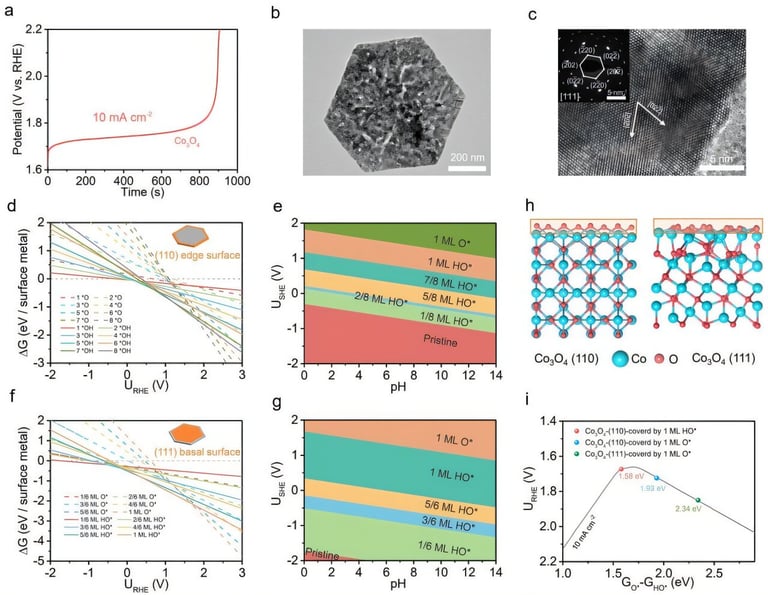

Professor Hao Li, who led the study, highlighted the significance of the mesoporous architecture in enabling single-atom Ir loading and ensuring stable catalytic activity.
This innovative catalyst design allows for a high Ir loading of 13.8 wt% without the formation of large Ir clusters, which is crucial for enhancing performance.
The study also revealed that leaching of Ir and Co during reactions was significantly reduced, with losses approximately one-fourth and one-fifth of those seen in conventional Ir/Co3O4 catalysts, respectively.
The findings from this research, which combines experimental data with computational modeling, are accessible through the Digital Catalysis Platform developed by the Hao Li Lab.
While iridium is recognized for its superior performance in the OER, its scarcity and high cost present challenges for scaling electrolyzer technologies.
Future research will focus on optimizing the doping level, scaling up the synthesis process, and integrating this catalyst into commercial electrolyzer systems.
The configuration of the catalyst facilitates the formation of Co-Ir bridge sites, which exhibit high intrinsic activity under acidic oxygen evolution reaction (OER) conditions.
Notably, the catalyst maintained its performance for over 100 hours with an overpotential of just 248 mV, demonstrating both stability and efficiency.
Computational analysis indicated that oxygen intermediates cover Co3O4 surfaces during reactions, passivating Co sites; however, Ir doping reactivates these sites and enhances the structural integrity of the catalyst.
This study, published in the Journal of the American Chemical Society, proposes a catalyst design that maximizes atomic-level efficiency and stability for hydrogen production.
Researchers have developed a new catalyst structure made of mesoporous single-crystalline Co3O4 doped with atomically dispersed iridium (Ir), offering a cost-effective pathway for hydrogen production via water electrolysis.
Summary based on 2 sources
Get a daily email with more Science stories
Sources

ScienceDaily • Apr 23, 2025
New porous crystal catalyst offers durable, efficient solution for clean hydrogen production
Phys.org • Apr 23, 2025
Porous crystal catalyst offers durable, efficient solution for clean hydrogen production