Breakthrough Study Unveils Pathway Fueling Deadly Pediatric Brain Tumor Spread
April 23, 2025

The study contributes to understanding how tumor and surrounding cells cooperate, offering insights into the progression of medulloblastoma and potential treatment avenues.
Co-first author Dr. Namal Abeysundara highlighted the importance of understanding these interactions to develop better treatments for affected children.
Researchers from Baylor College of Medicine, Texas Children's Hospital, and the Hospital for Sick Children in Toronto have identified a communication pathway between metastatic medulloblastoma cells and leptomeningeal fibroblasts that supports tumor growth.
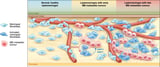
The research revealed that metastatic medulloblastoma cells secrete a protein called PDGF, which recruits and reprograms leptomeningeal fibroblasts into tumor-specific meningeal fibroblasts that support tumor growth.
Dr. Namal Abeysundara also noted that metastases are the leading cause of illness and death in children with medulloblastoma.
The findings indicate that disrupting the communication between tumor cells and fibroblasts could prevent disease progression.
This research may have broader implications, as similar mechanisms may apply to other cancers like melanoma, breast, and lung cancers that also metastasize to the leptomeninges.
A recent study published in Nature Cell Biology reveals critical insights into how medulloblastoma, the most common malignant brain tumor in children, spreads and grows on the leptomeninges, the membranes surrounding the brain and spinal cord.
Blocking the PDGF signaling pathway with a PDGF-R neutralizing antibody significantly improved survival rates in animal models, suggesting a potential therapeutic strategy for treating metastatic medulloblastoma.
The study highlights that reprogrammed meningeal fibroblasts differ from normal fibroblasts by secreting BMP4 and BMP7, proteins that enhance tumor colonization and spread.
The study highlights a previously unknown communication cascade involving PDGF and BMP signaling that facilitates tumor growth in the leptomeninges.
Dr. Michael D. Taylor, the corresponding author, emphasized that this discovery sheds light on how tumor and surrounding cells cooperate to create a supportive environment for disease progression.
Summary based on 2 sources
Get a daily email with more Science stories
Sources
Medical Xpress • Apr 23, 2025
New research points out a promising strategy for treating metastatic medulloblastoma
News-Medical • Apr 23, 2025
Study reveals how medulloblastoma spreads and grows on the leptomeninges