Antarctica's Glaciers Accelerate, Sparking Global Sea-Level Rise Concerns
May 14, 2025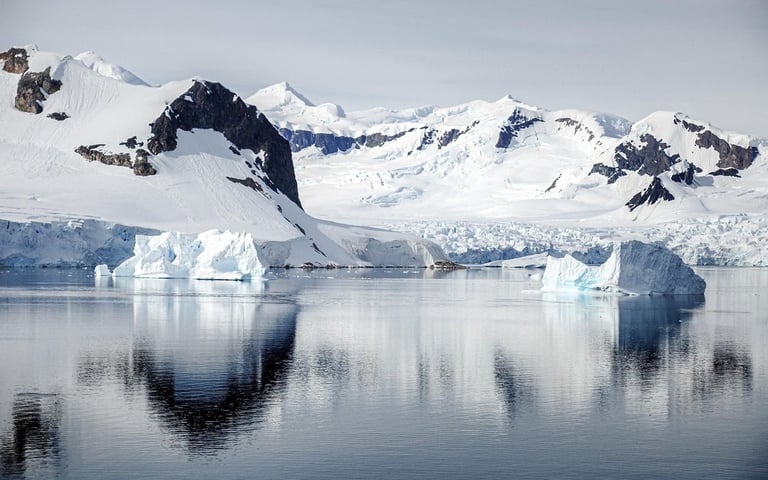

Recent research published in The Cryosphere reveals alarming acceleration of glaciers in West Antarctica, particularly in the Pope, Smith, and Kohler regions, which is raising concerns about global sea-level rise.
The Antarctic ice sheet, once considered stable, is now recognized as changing rapidly and unpredictably, complicating future sea-level rise models and their implications for coastal communities worldwide.
Between 2005 and 2022, significant acceleration was recorded in seven ice streams, with one glacier's speed increasing by 87% at its ocean meeting point.
This unprecedented discovery challenges previous beliefs that significant glacial changes took thousands of years, as these shifts have occurred in less than 18 years.
Notably, the Kohler East Glacier has been observed 'stealing' ice from the slower Kohler West Glacier, a phenomenon termed 'ice piracy,' which has significant implications for ice mass dynamics.
Experts emphasize that this redirection of ice flow is crucial for understanding contemporary changes in ice sheets and future projections of sea-level rise.
Changes in ice flow direction have been shown to significantly impact mass flux into critical ice shelves, such as the rapidly changing Dotson and Crosson ice shelves.
By 2022, six ice streams in the region were moving at speeds exceeding 700 meters per year, indicating potential instability in the ice sheet.
The study highlights the impact of changing ocean conditions, air temperature, and snowfall on glacier dynamics and the redirection of ice flow.
Researchers utilized high-resolution satellite data to document these rapid changes, revealing that processes previously thought to take centuries can now occur in under two decades.
Projected future sea-level rise could affect over 410 million people by 2100, with global sea levels having already risen over 10 centimeters in the last decade.
Satellite technology has revolutionized climate research, allowing scientists to monitor and predict changes in ice sheets with unprecedented accuracy and detail.
Summary based on 6 sources
Get a daily email with more Science stories
Sources

SciTechDaily • May 15, 2025
Glacier Speeds Up by 87% in a Shocking Case of “Ice Piracy”
The Daily Galaxy - Great Discoveries Channel • May 10, 2025
Scientists Reveal Strange Phenomenon of ‘Ice Piracy’ in Antarctica