Martian Streaks: No Water, Just Dust and Wind, New Study Finds
May 19, 2025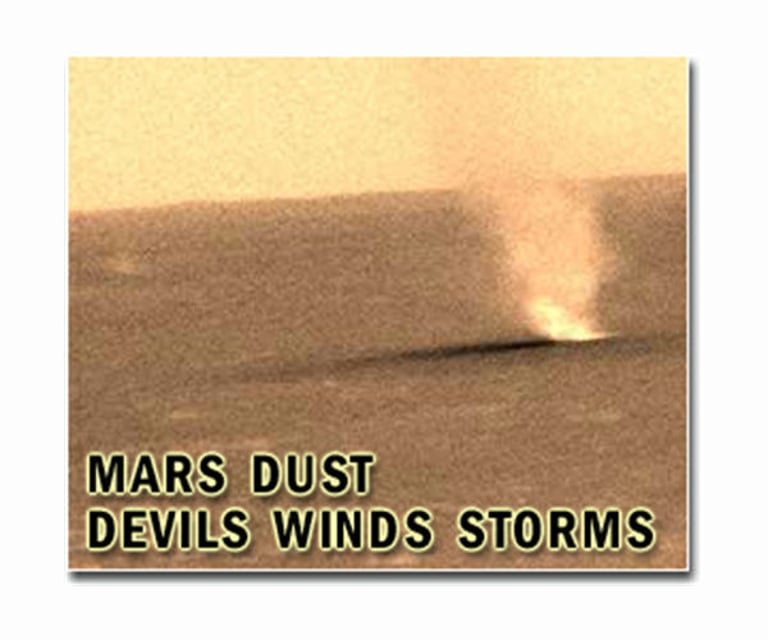


Researchers estimate that there could be up to two million slope streaks on Mars, although current satellite image resolution limits their detection.
The findings were published in the journal Nature Communications, co-led by Adomas Valantinas from Brown University.
A recent study from Brown University and the University of Bern has revealed that the dark streaks on Martian slopes, known as recurring slope lineae (RSL), are not caused by liquid water, but rather by dry processes like wind and dust movement.
These streaks have been under observation for nearly 50 years, first documented in images from the Viking missions in the 1970s, leading to ongoing debates about their origins.
While earlier theories suggested that these streaks could indicate the presence of water, the new findings suggest that researchers should focus on other indicators of life on Mars.
An image released by the European Space Agency in October 2024 highlights these streaks around Olympus Mons, the tallest volcano in the solar system, which stands at 22 kilometers high.
This research showcases the effectiveness of AI in planetary science, enhancing our understanding of Martian surface processes.
Most of the streaks are concentrated in the northern hemisphere, particularly in regions like Elysium Planitia, Arabia Terra, and the Tharsis volcanic plateau, where Olympus Mons is located.
These dark streaks, averaging between 600 and 775 meters in length, can appear suddenly and fade over time, with some even branching around obstacles.
The study underscores the significant role of wind and dust in shaping the Martian landscape and climate, despite these streaks modifying less than 0.1 percent of Mars' surface.
Co-leader Adomas Valantinas explained that ultra-fine dust can mimic liquid behavior when disturbed, creating patterns that resemble water flows.
Previous hypotheses regarding the formation of these streaks, which included wet mechanisms like ground springs and seasonal melt, have now been discredited.
Summary based on 23 sources
Get a daily email with more AI stories
Sources
BBC Newsround • May 20, 2025
Scientists solve mystery of dark 'streaks' on Mars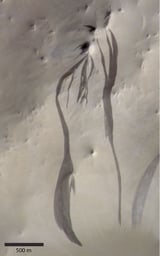
Yahoo News • May 19, 2025
Study casts doubt on water flows as cause of streaks on Martian slopes
Ars Technica • May 20, 2025
Tuesday Telescope: Finally, some answers on those Martian streaks
CBS News • May 20, 2025
New study suggests scientists were wrong about dark streaks on Mars