Humpback Whale Calves Found Far South: Study Challenges Migration Beliefs, Urges New Conservation Efforts
May 20, 2025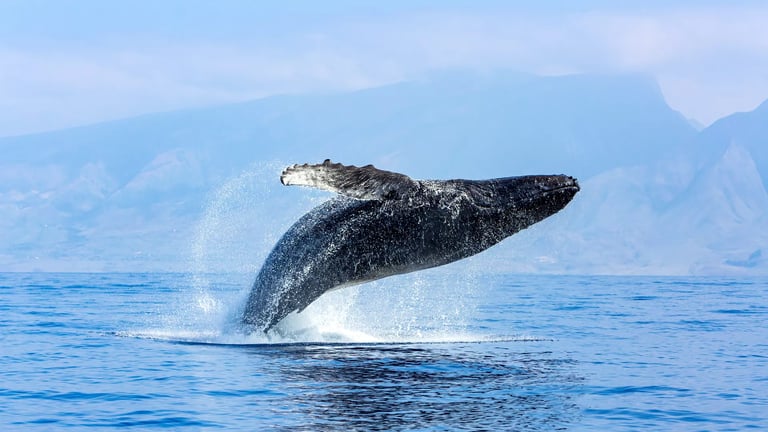


A recent study led by Dr. Tracey Rogers from the University of New South Wales, published in Frontiers in Marine Science, reveals that humpback whale calves are being born significantly further south than previously believed, with sightings extending to Tasmania, over 1500 kilometers from the assumed calving zone.
Historically, it was thought that humpbacks migrated to warmer tropical waters like the Great Barrier Reef for calving, but this new research challenges that notion.
The study emphasizes the need for expanded protected areas and increased awareness campaigns to safeguard vulnerable humpback whale calves, many of which were observed with injuries.
This discovery suggests that the importance of tropical waters for calving may have been overestimated, prompting a reevaluation of humpback migration patterns and conservation strategies.
In Eastern Australia, neonate calves have been observed as far south as 28°S, while in Western Australia, sightings have been recorded near 22.5°S, significantly extending known calving areas.
The study identified 11 confirmed births, 41 strandings, and 168 live calf observations, with evidence that many whales continued migrating north after giving birth.
Collaboration between researchers, government agencies, and whale watching operators enhances data collection and public education efforts, which are crucial for whale conservation.
Dr. Adelaide Dedden from the NSW National Parks and Wildlife Service stated that while legislation is in place to protect humpback whales, public awareness among recreational water users is lacking.
Public education on maintaining safe distances from mother-calf pairs is crucial, with guidelines suggesting a 100-meter distance from adults and 300 meters from mothers with calves.
Awareness and observation of these newborn calves outside traditional zones are crucial for protecting both the mothers and their calves amidst various human-related threats such as ship strikes and entanglements.
Dr. Vanessa Pirotta emphasized the need for more research to understand potential undiscovered phenomena affecting whale populations.
The study was inspired by a sighting during a whale-watching tour in July 2023, where PhD candidate Jane McPhee-Frew observed a mother and newborn calf in Newcastle Harbor.
Summary based on 9 sources
Get a daily email with more Science stories
Sources
The Guardian • May 20, 2025
Researchers puzzled as baby whales spotted in unexpected places along Australia’s ‘humpback highway’
Frontiers Science News • May 20, 2025
Baby on board: humpback whales give birth while migrating and carry on travelling - Frontiers | Science news
ScienceDaily • May 20, 2025
Surprise baby whale sightings reveal there's still much to learn about humpbacks