MIT Unveils Breakthrough TB Diagnostic Method Targeting ManLAM Glycan
May 5, 2025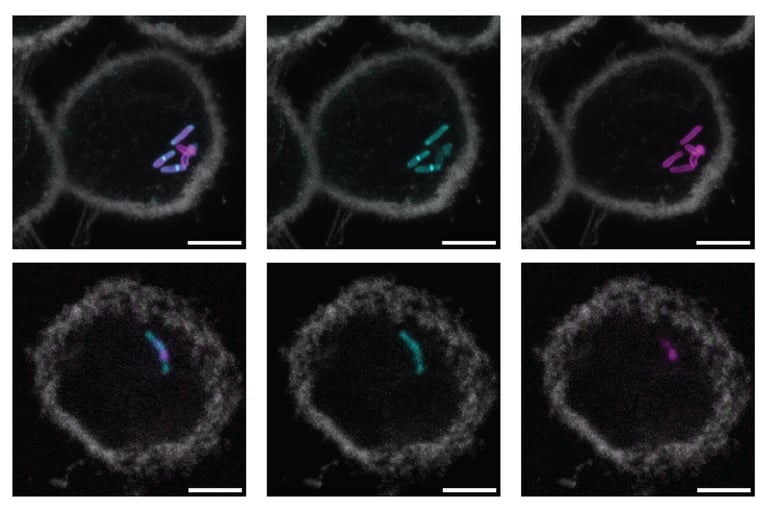

Researchers at MIT have developed a groundbreaking method to label a specific glycan known as ManLAM within the bacterial cell wall, which is crucial for studying its role in tuberculosis (TB) infection.
This innovative technique enables scientists to visualize the location of ManLAM and observe its behavior during the initial days of infection in host immune cells.
Future diagnostic tests will utilize the small-molecule label to detect ManLAM in urine samples, potentially improving sensitivity in diagnosing less active cases of TB.
The study successfully employed an oxaziridine tag to selectively label ManLAM, allowing for effective visualization and tracking of the bacteria during infection.
This research highlights the significance of glycans in TB pathogenesis, as they can mislead host immune responses, complicating the fight against the disease.
Future research will explore how this labeling approach can enhance the understanding of bacterial responses to antibiotics and immune stimulation.
The study received funding from prominent institutions, including the National Institutes of Health and the National Science Foundation, emphasizing its importance in public health.
The study reveals that ManLAM remains attached to the bacterial cell wall for several days post-infection, challenging previous assumptions that it was primarily shed into host cells.
Tuberculosis infects approximately 10 million people annually and results in over 1 million deaths each year, primarily due to its ability to evade the host immune system.
Current diagnostic methods, such as chest X-rays and sputum cultures, are often inaccessible in developing countries and have high false negative rates, underscoring the need for simpler, faster tests.
Lead researcher Laura Kiessling emphasizes the urgent need for effective diagnostic options, particularly for populations like children who struggle to provide sputum samples.
The researchers aim to create a diagnostic tool that detects TB-associated glycans in urine, offering a faster and more affordable alternative to existing tests.
Summary based on 3 sources
Get a daily email with more Science stories
Sources

ScienceDaily • May 5, 2025
New molecular label could lead to simpler, faster tuberculosis tests
Phys.org • May 5, 2025
New molecular label could lead to simpler, faster tuberculosis tests
EurekAlert! • May 5, 2025
New molecular label could lead to simpler, faster tuberculosis tests