Superb Starlings Show Complex Social Ties: Reciprocal Helping in Breeding Unveiled by 20-Year Study
May 7, 2025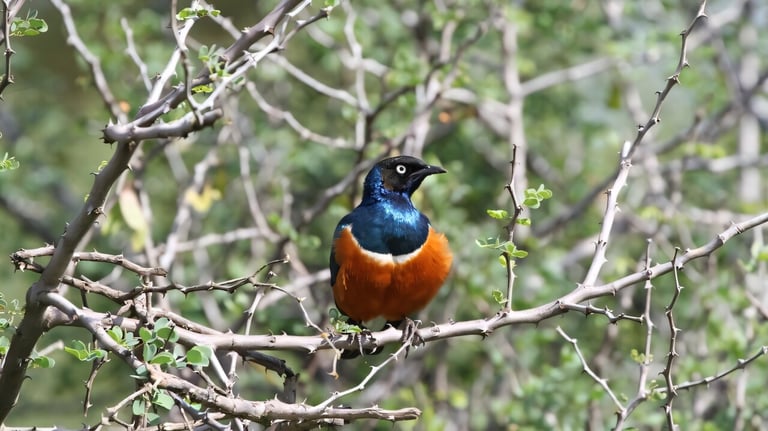


Conducted over two decades, the research focused on the African superb starling, highlighting their complex social structures where individuals alternate between roles of 'breeders' and 'helpers'.
Helpers often preferred specific non-kin, suggesting that social relationships provide direct fitness benefits beyond merely increasing group size.
Overall, the study emphasizes the intricate social dynamics of starling societies, which mirror human social structures by including both related and unrelated individuals.
Superb starlings form large mixed-kin groups, ranging from 7 to 60 members, where non-breeding helpers assist breeding pairs with various reproductive tasks.
In harsh environments like Kenya, these starlings rely heavily on helpers for feeding and protecting their chicks, demonstrating the importance of cooperative breeding.
A recent study published in the journal Nature reveals that superb starlings engage in long-term reciprocal helping relationships, supporting each other in breeding efforts.
The findings raise intriguing questions about the motivations behind reciprocal help among non-relatives and contribute to our understanding of altruism in social animals.
The study shows that while kin selection plays a role, the helping behavior in superb starlings is more influenced by direct fitness benefits, underscoring the complexity of their cooperative interactions.
Reciprocal helping was documented among 142 helper-breeder pairs, revealing a significant increase in helping rates among those who had previously received assistance.
The research indicates that the importance of direct versus indirect fitness benefits varies by sex and dispersal history, with immigrants showing clear evidence of reciprocal helping.
Despite a strong inclination towards kin-biased helping, a significant portion of assistance—55% from resident females and 62% from resident males—was directed towards non-kin.
The extensive observational study required decades of data collection to uncover the subtle dynamics of role swapping within these social structures.
Summary based on 7 sources
Get a daily email with more Science stories
Sources
The New York Times • May 7, 2025
These Beautiful Birds Form Something Like Lasting Friendships
The Guardian • May 7, 2025
Starlings form ‘friendships’ to help each other with breeding, study finds
Nature • May 7, 2025
Superb starlings swap helper and breeder roles with kin and non-kin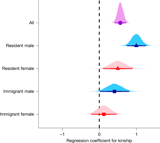
Nature • May 7, 2025
A cryptic role for reciprocal helping in a cooperatively breeding bird