First-Ever Footage of Rare Antarctic Squid Captured in Southern Ocean's Midnight Zone
June 10, 2025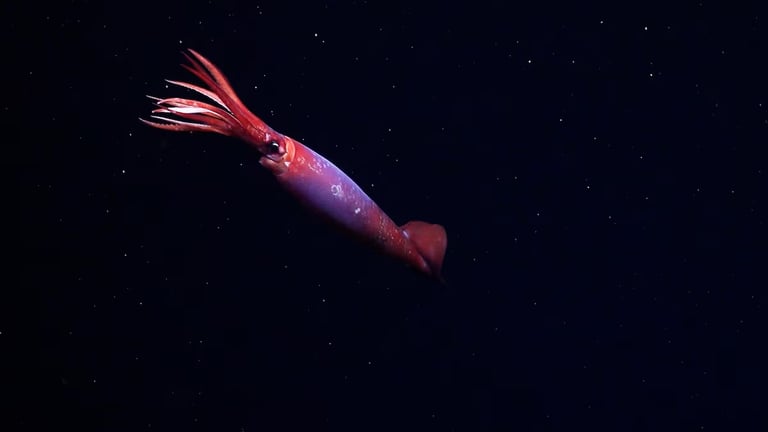

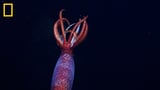
During a recent research expedition in the Southern Ocean, scientists captured the first footage of a living Gonatus antarcticus squid, a species previously known only from carcasses.
This expedition was part of the National Geographic Society's Rolex Perpetual Planet Ocean Expeditions, aimed at exploring the Powell Basin, which reaches depths of about 9,800 feet.
Originally scheduled for Christmas Eve, the team's plans were altered due to hazardous ice conditions, prompting them to explore the outer edge of the Powell Basin instead.
The sighting of the squid occurred at a depth of 2,152 meters (approximately 1.34 miles) in the Weddell Sea, an area recognized for its vibrant marine life and near-pristine ecosystem.
Researcher Manuel Novillo spotted the squid near the submersible, leading to a brief but significant observation that was considered astonishing by the team.
The squid was approximately three feet long and exhibited signs of previous predator encounters, including fresh scratches and sucker marks, yet it displayed vibrant coloration, indicating good health.
Kat Bolstad from Auckland University of Technology confirmed the squid's identification, noting its distinctive large hooks at the end of its longest tentacles, likely used for capturing prey.
While researchers could not determine the squid's sex, if it were female, it would be unusually large for its species, raising questions about sexual dimorphism or the existence of multiple species.
In addition to filming the squid, researchers collected various samples from the Southern Ocean, including sediment, water, and biota, while mapping underwater terrains at depths up to 13,000 feet.
The captured footage of the Gonatus antarcticus will be featured in an upcoming National Geographic documentary, highlighting the significance of this discovery.
The squid was found in the midnight zone, a depth range where no sunlight penetrates, and bioluminescent organisms provide the only illumination, emphasizing the unique conditions of its habitat.
The ongoing research in the Weddell Sea is generating excitement due to its status as one of the few near-pristine ecosystems on Earth, offering valuable insights into climate change effects.
Summary based on 6 sources
Get a daily email with more Science stories
Sources
Animals • Jun 10, 2025
We've never seen this rare squid alive in the wild—until now
Popular Science • Jun 10, 2025
Watch the mesmerizing first-ever footage of a rare Antarctic squid