Breakthrough Brain Implant Restores Speech and Singing for ALS Patient with Instant Neural Translation
June 11, 2025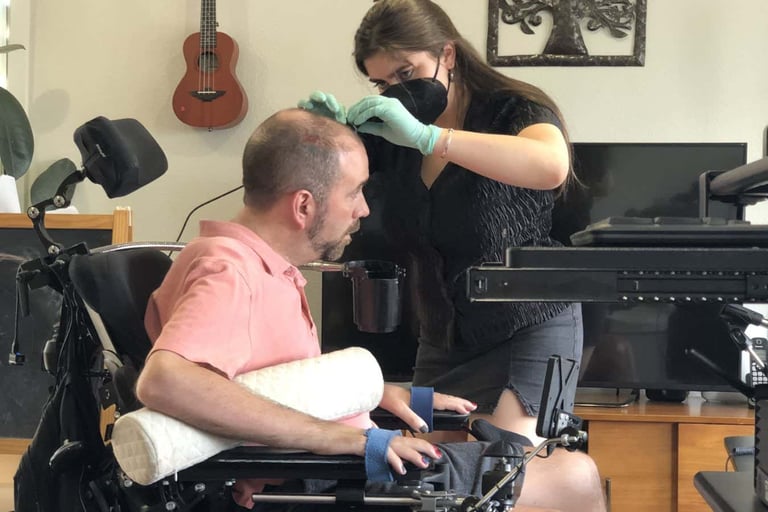


A groundbreaking brain implant has enabled a 45-year-old man with severe speech disabilities, caused by amyotrophic lateral sclerosis (ALS), to communicate expressively and even sing by translating his neural activity into words almost instantly.
This innovative device, a brain-computer interface (BCI), utilizes artificial intelligence to decode electrical brain signals during speech attempts, effectively reproducing features such as tone, pitch, and emphasis.
In a study published in Nature on June 11, 2025, researchers demonstrated that the synthetic voice could articulate words within 10 milliseconds of detecting neural signals, a remarkable improvement over previous systems that experienced delays of up to three seconds.
Christian Herff, a computational neuroscientist, referred to this advancement as the 'holy grail' in speech BCIs, as it allows for real, spontaneous, and continuous speech.
To create a more personalized synthetic voice, the researchers employed voice-cloning technology, training AI algorithms with recordings of the participant's voice prior to his illness, ensuring the synthetic voice closely resembles his own.
The research team implanted 256 electrodes into brain regions responsible for controlling facial muscles, training the AI with thousands of sentences to accurately capture the desired pitch and intonation.
These electrodes read the man's neural activity and generate speech sounds within 25 milliseconds, significantly enhancing the potential for natural conversation.
The system allows the man to engage in real-time conversations and even sing simple melodies, with the AI adjusting pitches in real-time.
While Maitreyee Wairagkar from UC Davis acknowledges that the technology still requires refinement for improved clarity, the participant has expressed satisfaction with the system, feeling it reflects his authentic voice.
David Brandman, a team member, emphasized the man's remarkable journey from paralysis and muteness to being able to maintain a full-time job and engage in meaningful conversations.
The ability to produce spontaneous speech and sounds without prompts marks a significant advancement in communication technology for individuals with paralysis.
The AI model behind this technology was trained to associate specific neural patterns with intended words and inflections, resulting in a voice that mirrors both the content and manner of speech.
Summary based on 2 sources
Get a daily email with more Science stories
Sources
Nature • Jun 11, 2025
World first: brain implant lets man speak with expression ― and sing
New Scientist • Jun 11, 2025
Mind-reading AI turns paralysed man's brainwaves into instant speech