Indian Researchers Develop Cost-Effective Nanoparticles for Enhanced Cancer Therapy
June 17, 2025

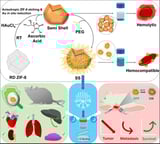
This innovative approach utilizes a rhombic dodecahedron-shaped metal-organic framework (ZIF-8) as a sacrificial template and employs mild reducing agents like ascorbic acid at room temperature, avoiding harsh chemical conditions.
The new synthesis technique simplifies the fabrication process, reduces costs, and improves environmental and biological compatibility compared to traditional multi-step methods that are labor-intensive and use toxic agents.
The semi-shell structures are modified with polyethylene glycol (PEG) to enhance their stability, safety, and clinical applicability, which is crucial for their use in medical treatments.
In preclinical trials on mouse models with advanced metastatic breast cancer, the PEGylated semi-shell nanoparticles demonstrated high photothermal conversion efficiency, effectively abating tumors and improving survival rates.
The treatment significantly improved survival rates and reduced tumor relapse, indicating the potential for better outcomes in advanced breast cancer therapy.
Researchers in India have developed a novel one-step colloidal synthesis method for creating innovative nanoparticles with a unique semi-shell nano-cup morphology, aimed at enhancing photothermal cancer therapy.
Advantages of this new approach include avoidance of harsh chemicals, room temperature processing, enhanced biocompatibility through PEGylation, and high stability with low toxicity during treatment.
The synthesized semi-shells exhibit strong light absorption and scattering in the near-infrared spectrum, making them ideal for effective photothermal therapy.
This breakthrough represents a significant advancement in cancer treatment, with the potential for real-world medical applications, especially in resource-limited settings.
The research team aims to further explore combining chemotherapy with photothermal therapy and the potential use of these nanoparticles for advanced diagnostics through techniques like Surface-Enhanced Raman Spectroscopy (SERS).
The study was conducted by the Institute of Nano Science and Technology (INST) in collaboration with ACTREC and IIT Bombay, and published in Communications Chemistry.
Future research will explore the combination of chemo-photothermal therapy and the use of these semi-shells in biosensing applications, leveraging their unique optical properties.
Summary based on 2 sources
Get a daily email with more Science stories
Sources

Devdiscourse • Jun 17, 2025
Revolutionary One-Step Nanoparticle Synthesis Boosts Photothermal Cancer Therapy | Satire