Endangered Bogong Moths Use Starry Skies for Migration, Urgent Conservation Needed
June 18, 2025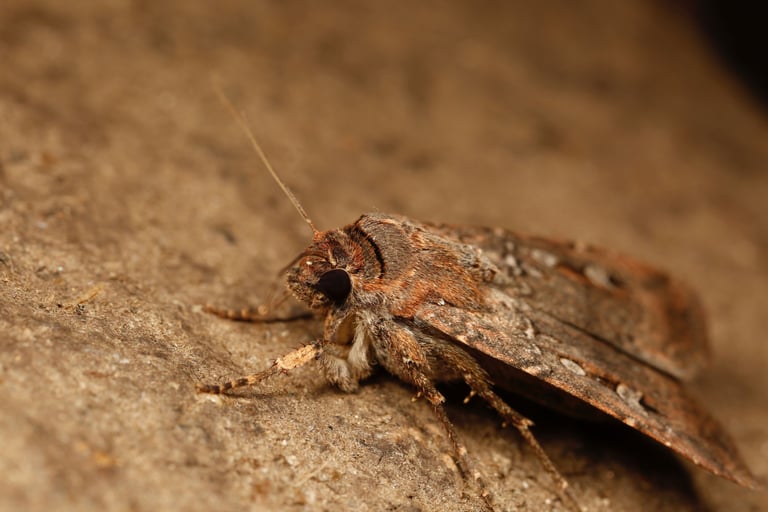

The study emphasizes the impressive navigational abilities of these insects, enhancing our understanding of animal migration and orientation mechanisms.
Lead author David Dreyer's experiments revealed that when deprived of magnetic cues and visual stimuli, the moths became disoriented but regained their directional accuracy when shown a projection of a starry sky.
The findings highlight the necessity for migratory animals to have multiple navigational cues, providing backup systems in case of environmental disruptions.
However, the Bogong moth species has recently been classified as endangered, with a staggering 99.5% population decline since 2021, primarily due to severe drought conditions and bushfires.
The research advocates for the protection of migratory pathways and dark skies, which are crucial for the moths' navigation.
Researchers have discovered that Bogong moths are capable of navigating using constellations and the Milky Way, marking them as the first known invertebrates to employ a stellar compass for long-distance migration.
In experiments, the moths exhibited directional flight patterns consistent with their migration when exposed to simulated spring skies, while reversing their direction under fall-like conditions.
This research underscores the importance of celestial cues in navigation strategies across various species, paralleling migratory patterns observed in birds and other animals.
Conservation efforts must also address the impact of urbanization and light pollution, which can disorient moths as they navigate through city environments.
These findings could inform advancements in robotics and drone navigation, as well as conservation strategies for vulnerable species like the Bogong moth.
Conducted by scientists from Lund University and the Australian National University, the research highlights the migration of approximately four million moths each year.
Published in the journal Nature, the study showcases the remarkable navigation capabilities of these small creatures, whose brains are smaller than a grain of rice.
Summary based on 15 sources
Get a daily email with more Science stories
Sources

Nature • Jun 18, 2025
These moths use the stars to navigate on an epic migration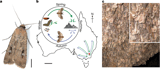
Nature • Jun 18, 2025
Bogong moths use a stellar compass for long-distance navigation at night
Nature • Jun 18, 2025
Migratory moths navigate using the stars
Nature • Jun 18, 2025
Flight simulator for moths reveals they navigate by starlight