Discovery Unveils Enhancer Gene Mutations' Impact on Human Development and Therapy Design
June 18, 2025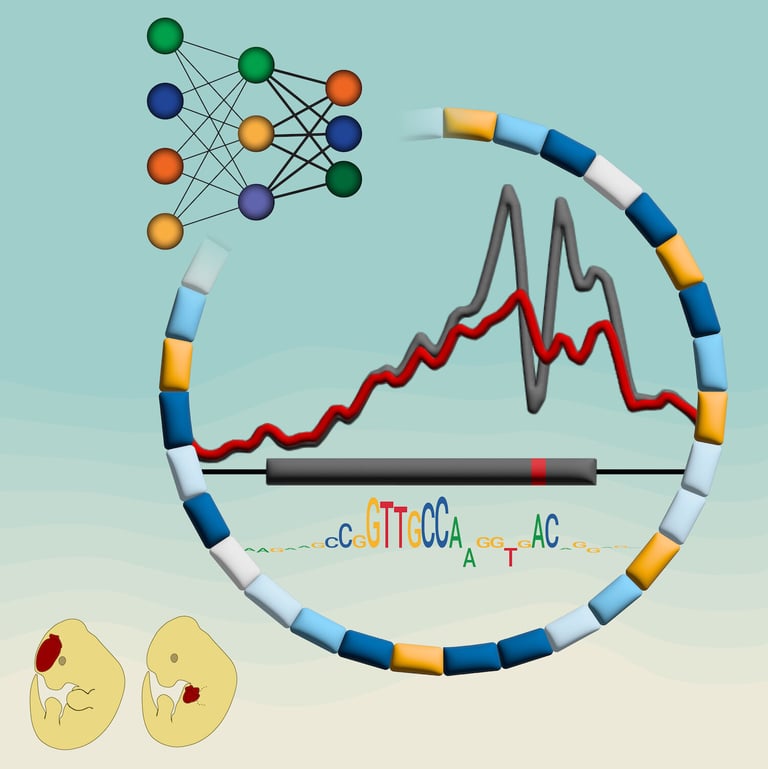


This research, supported by the National Institutes of Health, contributes to the ongoing exploration of gene regulation and the role of AI in enhancing our understanding of biology.
Researchers from Lawrence Berkeley National Laboratory and Stanford University have made significant discoveries regarding enhancers, which are regulatory DNA sequences that control gene expression during embryonic development.
Utilizing a mouse model, the team investigated seven human enhancers linked to critical developmental processes, revealing that mutations could lead to gene activation in unintended tissues, such as the heart and nervous system.
The study, published in Nature, highlights that multiple modular sequences within enhancers are essential for proper gene expression, and even a single nucleotide mutation can dramatically alter gene activation.
These findings suggest important implications for understanding human disorders and designing gene therapies, emphasizing the need for caution in developing tissue-specific interventions to avoid unintended effects.
The complexity of enhancer functionality and a lack of data have made it challenging to create accurate predictive models using machine learning, but the research team has generated a large experimental dataset to aid in this effort.
A new AI model developed by Stanford collaborators could identify important enhancer sequences, yet it missed some critical areas recognized through experimental evidence, underscoring the limitations of current predictive models.
The study serves as a reminder that while AI can aid in understanding enhancer biology, it must be supported by experimental biology to ensure accuracy and comprehensiveness.
Researchers faced challenges in investigating enhancers due to their complex binding sites for transcription factors, which require systematic experimentation to understand mutation effects.
First author Michael Kosicki emphasized the importance of these findings for understanding gene regulation and their implications for human disorders and gene therapy design.
Co-lead author Len Pennacchio cautioned that single nucleotide changes could have significant developmental impacts, highlighting the need for careful design in tissue-specific gene therapies.
The findings indicate that existing machine learning models, while accurate, may miss some critical sequences that are essential for enhancer function, underscoring the need for experimental validation.
Summary based on 3 sources
Get a daily email with more AI stories
Sources
Phys.org • Jun 18, 2025
Cracking the genome's switchboard: How AI helps decode gene regulation
Newswise • Jun 18, 2025
Cracking the Genome’s Switchboard: How AI Helps Decode Gene Regulation
Berkeley Lab News Center • Jun 18, 2025
Cracking the Genome’s Switchboard: How AI Helps Decode Gene Regulation