Study Reveals Diverse Brain Profiles in Depression, Urges Personalized Treatment Approaches
June 19, 2025

The study underscores the clinical importance of accurately subtyping depression to match patients with effective treatments, although its findings are primarily limited to older adults.
Co-investigator Deanna M. Barch, PhD, calls for future research to refine depression subtypes by addressing both clinical and neurobiological heterogeneity, which could enhance treatment outcomes.
The research identified two subgroups among patients with acute depression: one maintaining normal cognitive function and the other exhibiting significant cognitive impairment, highlighting the inadequacy of standard questionnaires.
The use of normative modeling allowed researchers to better detect brain deviations from healthy norms, revealing patterns obscured when symptoms were combined into heterogeneous groups.
Lead investigator Janine D. Bijsterbosch, PhD, emphasizes the importance of understanding heterogeneity within depression, focusing on specific components rather than treating it as a singular condition.
Depression affects approximately 9.2% of Americans each year, yet many cases remain underdiagnosed, with only about 30% of patients responding effectively to initial treatments.
John Krystal, MD, editor of the journal, emphasizes that accurately subtyping patients is crucial for effective treatment matching, and the study advances this goal by linking clinical assessments with brain imaging findings.
Findings highlight the importance of neuroimaging in capturing variations in depression that clinical assessments alone may miss, aiming to improve future clinical care and treatment effectiveness.
A new study published in Biological Psychiatry reveals that multiple brain profiles can lead to the same clinical symptoms of depression, indicating both one-to-one and many-to-one heterogeneity in the condition.
Researchers utilized data from the UK Biobank to explore the relationship between clinical symptoms and neurobiological profiles, testing whether a direct or complex mapping exists between them.
One neurobiological profile identified was linked to worse cognitive outcomes, suggesting that MRI scans could predict clinical outcomes beyond what standard symptom screening can.
Key findings suggest that patients with isolated symptoms displayed stronger brain abnormalities than those with mixed symptoms, indicating a need for personalized treatment approaches.
Summary based on 5 sources
Get a daily email with more Science stories
Sources

Medical Xpress • Jun 19, 2025
Different brain profiles, same symptoms: Subtyping patients may provide key insights into depression's complexities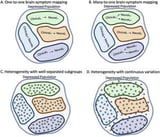
Neuroscience News • Jun 19, 2025
Multiple Brain Profiles May Underlie the Same Depressive Symptoms
Mirage News • Jun 19, 2025
Research Uncovers Subtype Insights into Depression's Complexities