Cancer Cells Hijack Neuron Mitochondria to Boost Survival and Spread, Study Reveals
June 25, 2025

A groundbreaking study published in Nature reveals that cancer cells enhance their survival and spread by stealing mitochondria from nearby neurons.
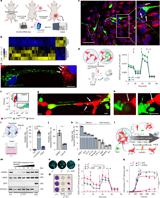
In both in vitro and in vivo experiments, researchers found that breast cancer cells acquire mitochondria from neighboring neurons, which leads to increased mitochondrial mass and improved energy metabolism.
Researchers from the University of Texas MD Anderson Cancer Center, including Anand K. Singh and Yuan Pan, stress the importance of understanding the interactions between neurons and cancer cells.
The study highlights that nerve infiltration in tumors is linked to aggressive cancer behavior, with denervated cancer cells showing reduced growth and altered metabolic profiles.
Experiments on mice with aggressive breast cancer indicated that blocking nerve function reduced the metabolic activity of cancer cells, underscoring the influence of neurons on tumor metabolism.
Elizabeth Repasky from the Roswell Park Comprehensive Cancer Center describes this discovery as a significant advancement in the field of cancer neuroscience.
The findings suggest that inhibiting mitochondrial transfer could reduce the spread of lethal tumors, prompting researchers to explore drug development targeting this process.
The study emphasizes the role of tumor-associated neurons in supporting cancer-cell migration and metastasis, particularly in breast cancer.
Co-author Simon Grelet from the University of South Alabama highlighted that targeting this mitochondrial theft could lead to new treatment strategies against metastasis, a major contributor to cancer lethality.
Clinical samples from prostate cancer patients showed a correlation between perineural invasion and increased mitochondrial load in cancer cells, supporting the experimental findings.
Denervated tumors exhibited decreased mitochondrial content, indicating that nerve support is crucial for maintaining cancer cell energy needs and overall metabolic efficiency.
Notably, 14% of tumor cells that spread to the brain contained nerve-derived mitochondria, suggesting these cells are more adept at metastasis than those without such mitochondria.
Summary based on 4 sources
Get a daily email with more Science stories
Sources
Nature • Jun 25, 2025
Nerve-to-cancer transfer of mitochondria during cancer metastasis
Nature • Jun 25, 2025
Cancer cells get power boost by stealing mitochondria from nerves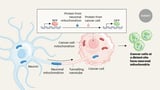
Nature • Jun 25, 2025
Neuronal transfer of mitochondria to tumour cells promotes cancer spread
New Scientist • Jun 25, 2025
Cancer cells steal mitochondria from nerve cells to fuel their spread