China Leads Global Scientific Collaboration with Breakthroughs in Space, Brain Mapping, and Environmental Projects
July 15, 2025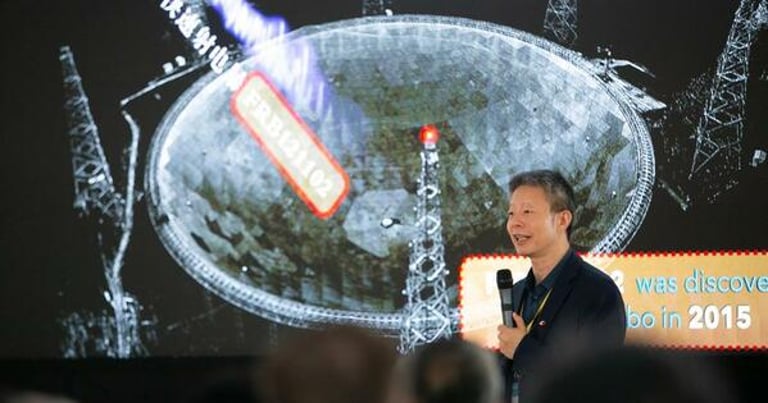

China supports global initiatives such as the Deep-time Digital Earth and Ocean Negative Carbon Emission projects, which aim to address geological mysteries and establish international standards for oceanic carbon neutrality.
An international brain mapping project led by Chinese scientists has produced groundbreaking insights into consciousness, published recently in the journal Cell, involving global collaboration.
The Huairou Science City in Beijing has opened 16 advanced research facilities, providing over 430,000 hours of access in 2024 to global researchers, supporting international scientific efforts.
Over 300 scientists from China, France, Sweden, and Britain collaborated on expanding the brain atlas to better understand neural networks related to perception, movement, and decision-making.
China is actively promoting global scientific collaboration by investing in major projects across physics, life sciences, and space exploration, including initiatives like the FAST radio telescope and lunar missions with international payloads.
The country is engaging the international scientific community through its advanced telescopes and space missions, fostering cooperation on lunar exploration and space-weather monitoring.
China's ongoing commitment to global scientific cooperation underscores its role in advancing research that benefits the international community.
China plans to launch the International Primate Mesoscale Brain Atlas Consortium in September, involving scientists from over 20 countries, to create detailed maps of primate brains, building on years of Chinese research.
The United Nations-approved Global Hadal Trench Exploration Program will see over 10 nations collaborate to explore Earth's deepest ocean trenches, vital for understanding the origins and future of life.
A recent scientific breakthrough involved the publication of ten papers in Cell, detailing neural connections across species, advancing understanding of brain functions.
Experts emphasize the importance of continued international collaboration in science to address complex challenges and foster trust among nations.
China's -HuB and π-HuB Projects aim to decode human protein diversity and map bodily functions, involving participation from 18 countries, following the successful human genome mapping.
Summary based on 3 sources