Revolutionary Microsensing Tech Transforms Cancer Cell Monitoring, Bypasses Microscopy Limitations
July 17, 2025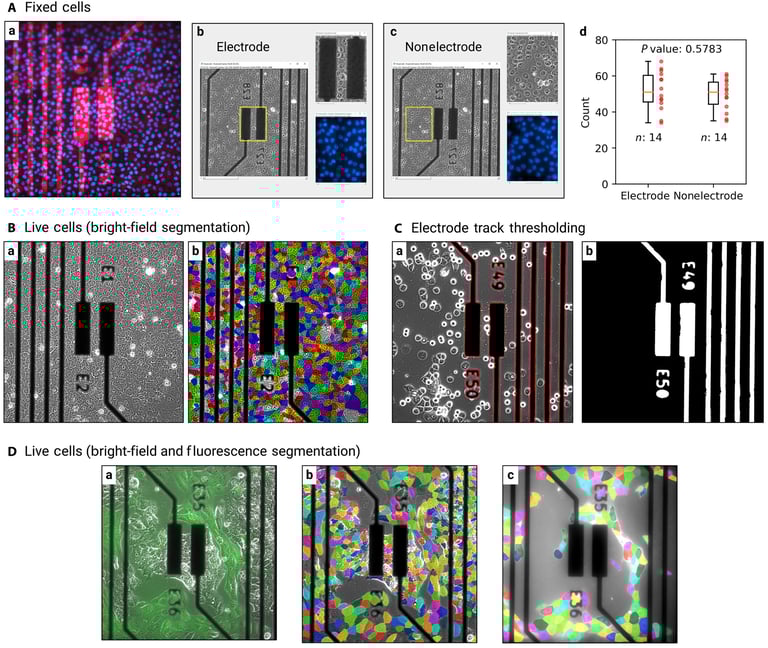

The research was a collaborative effort involving Sensome, École Polytechnique, and the Center for Nanoscience and Nanotechnology, focusing on breast epithelial cells.
On July 17, 2025, a study published in Science Advances revealed that Sensome, in collaboration with École Polytechnique and CNRS, has developed a groundbreaking non-invasive method for monitoring cancer cell dynamics using microsensing technology.
This innovative approach integrates micro-electrode arrays and electrical impedance spectroscopy (EIS) with predictive algorithms, providing faster, noise-resilient predictions compared to traditional EIS methods.
The study demonstrated the technology's effectiveness in monitoring both normal and cancerous breast epithelial cells, with results aligning closely with microscopy findings.
Electrical impedance spectroscopy (EIS) measurements successfully predicted various cell characteristics, such as density and diameter, validating the method's accuracy.
This marks the first use of EIS for quantitative, real-time monitoring of cell spatiotemporal dynamics, offering new insights into cancer progression.
The methodology enables tracking changes in cell density and type over time without the limitations of traditional microscopy, which can be cytotoxic and hinder optical access.
Abdul Barakat from CNRS emphasized that this technology could replace microscopy, overcoming issues like cytotoxicity and optical access limitations, and is crucial for understanding spatial and temporal cell organization in cancer.
Franz Bozsak, CEO of Sensome, highlighted the potential of this technology to advance cancer diagnosis and treatment by providing detailed insights into cell behavior, tumor growth, and differentiation.
The approach allows for accurate predictions of cancer cell behavior, including differentiation and evolution, by analyzing tissue characteristics surrounding the sensor.
Sensome's microsensing technology, combined with micro-electrode arrays and EIS, enables real-time, label-free analysis of cell dynamics, offering a significant advantage over traditional methods.
This technology could eliminate the need for microscopy in long-term cancer monitoring, minimizing disruption to cell processes.
Summary based on 3 sources
Get a daily email with more Science stories
Sources

Medical Xpress • Jul 17, 2025
New technology successfully monitors cancer progression at the cellular level
École polytechnique • Jul 17, 2025
New study shows that innovative methodology powered by Sensome technology …