Study Unveils Endoplasmic Reticulum's Role in Wound Healing and Cancer Spread
August 18, 2025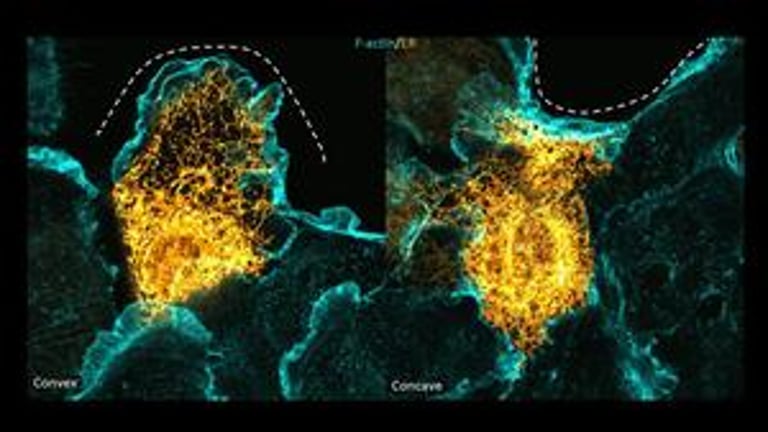

A groundbreaking study published in Nature Cell Biology reveals that the endoplasmic reticulum (ER) in epithelial cells dynamically changes shape in response to tissue gap curvature, playing a key role in cell movement during wound closure.
The findings also raise intriguing questions about how organelles guide tissue formation and organ repair after injury, expanding our understanding of cellular and tissue dynamics.
Dr. Pradeep Keshavanarayana emphasized the potential medical applications of this research, including developing new therapies for wounds and cancer metastasis.
Collaborative computational models from the University of Birmingham suggest that ER reorganization minimizes intracellular strain energy, optimizing mechanical efficiency during tissue repair.
These ER morphological changes depend on cytoskeletal components like actin and microtubules, with microtubules being especially crucial in convex wound scenarios, facilitating cellular adaptation.
Mathematical modeling demonstrates that the structural reorganization of the ER helps reduce mechanical strain on cells during migration, effectively acting as a mechanotransducer that links physical cues to cellular signaling pathways.
Professor Fabian Spill highlighted that this research exemplifies an interdisciplinary effort, connecting organelle shape with cellular behavior and uncovering a new organelle-mediated mechanism of mechanotransduction.
The study underscores the importance of combining experimental biology with mathematical modeling, revealing a novel organelle-based mechanism that influences how cells sense and respond to their mechanical environment.
This research opens new questions about the roles of organelles in tissue formation, organ repair, and development, suggesting potential avenues for innovative therapeutic strategies.
Professor Tamal Das explained that the study enhances our understanding of how mechanical stimuli influence cell behavior through ER reorganization, which is relevant to sensory functions like touch, hearing, and balance.
He also noted that understanding ER-mediated mechanotransduction could lead to improved treatments for tissue regeneration and possibly slow down cancer spread.
Summary based on 6 sources
Get a daily email with more Science stories
Sources
Phys.org • Aug 18, 2025
Cells mount distinct responses to differently shaped wounds in tissue, study finds
EurekAlert! • Aug 18, 2025
TIFR Hyderabad study reveals how cells mount distinct responses to differently shaped wounds in a tissue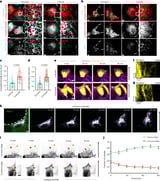
Medical Xpress • Aug 18, 2025
How the body's cells change shape to deal with wounds