Revolutionizing Chocolate: Science-Driven Fermentation Promises Consistent, High-Quality Cocoa Flavor
August 18, 2025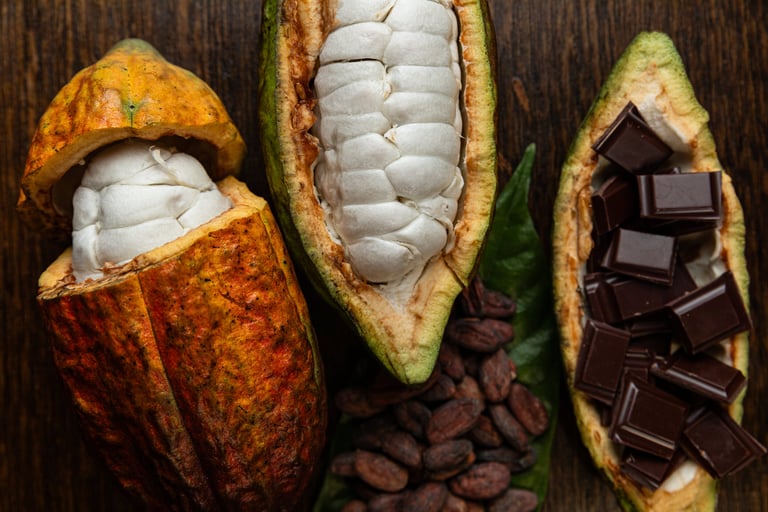

Researchers from the University of Nottingham have identified key factors such as temperature, pH, and microbial communities that influence chocolate flavor during cocoa bean fermentation, offering a pathway to improve flavor consistency.
The study suggests shifting from traditional spontaneous fermentation to a science-driven, standardized process, akin to innovations in beer and cheese production, which could revolutionize chocolate manufacturing.
By analyzing fermentation across farms in Colombia's Santander, Huila, and Antioquia regions, researchers observed differences in microbial activity and flavor profiles, highlighting the importance of microbial management.
Using advanced microbiological techniques, the team validated that their laboratory fermentation model accurately mimics on-farm processes, ensuring practical relevance for industry application.
This research offers significant benefits for smallholder farmers by providing a standardized method to achieve consistent, high-quality fermentations, thereby enhancing their economic prospects.
Practical approaches, such as applying microbes from the outside of cocoa pods, could help farmers manipulate microbial communities without sourcing microbial cultures directly.
The study demonstrates how controlled microbial manipulation can merge traditional fermentation with modern science, fostering innovation in the food industry.
A curated microbial consortium was developed to replicate natural fermentation outcomes in laboratory conditions, enabling controlled and reproducible processes.
Further research is needed to determine if these microbes are prevalent across cocoa farms worldwide, considering environmental and climate differences.
The research draws parallels to other fermented foods where starter cultures have improved product quality and consistency, indicating a similar potential transformation in cocoa fermentation.
While this advancement enhances chocolate quality and consistency, it does not address larger issues like environmental impact and child labor in chocolate production.
Professor David Salt described the microbial combination as the 'secret sauce' for enhancing cocoa quality and flavor consistency.
The synthetic microbial community successfully replicated on-farm fermentation results, producing chocolate with similar fine-flavor characteristics.
Cocoa fermentation begins with harvesting, where beans ferment with pulp, changing color from pale yellow to dark brown or violet before drying.
Experiments with sterilized cocoa beans fermented with these microbes resulted in liquors with enhanced citrus, berry, floral, tropical, and caramel flavors, confirmed by expert taste tests.
Understanding microbial metabolic pathways such as glycolysis and amino acid catabolism is crucial, as they generate key flavor and aroma compounds during fermentation.
Samples from Santander and Huila regions produced cocoa with fruity, floral, and citrus notes, while Antioquia samples had a simpler, more bitter taste, reflecting regional flavor differences.
Summary based on 7 sources
Get a daily email with more Science stories
Sources

The Guardian • Aug 18, 2025
Scientists claim to have unlocked ‘secret sauce’ needed for fine chocolate
Nature • Aug 18, 2025
Why chocolate tastes so good: microbes that fine-tune its flavour
Popular Science • Aug 18, 2025
How to make perfect chocolate, according to science
New Scientist • Aug 18, 2025
How cocoa beans' microbiomes are key to the finest chocolate flavours