Wildfire Char: A New Weapon Against Methane Emissions and Climate Change
August 19, 2025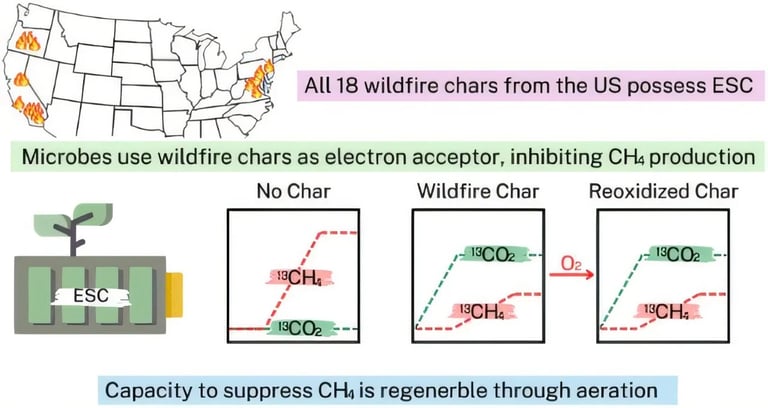

Research led by University of Delaware professor Pei Chiu reveals that wildfire char and biochar possess a high capacity for electron storage, enabling microbes to 'breathe' these chars and potentially reduce methane emissions.
Chiu emphasizes that both wildfire-produced char and manmade biochar are significant in environmental science, particularly for their potential in climate mitigation by supporting methane-breathing bacteria.
Wildfire char, the carbon-rich residue from wildfires, may help lower atmospheric methane levels by fostering bacteria that breathe char and suppress methane-producing microbes called methanogens.
Methanogens are responsible for over half of global methane emissions, which are a major contributor to climate change, making this research highly relevant for environmental efforts.
Chiu is motivated by the potential to impact climate change within his lifetime by reducing methane emissions, recognizing the importance of harnessing natural microbial processes.
Methane is a greenhouse gas over 85 times more potent than carbon dioxide and accounts for more than 30% of current global warming, so reducing its emissions could significantly mitigate climate change.
Supporting microbes that breathe char can outcompete methanogens, thereby reducing methane levels and offering a promising strategy for climate mitigation.
Natural microbial processes that metabolize char have likely been occurring for hundreds of millions of years, and leveraging these could provide faster environmental benefits due to methane's shorter atmospheric lifespan.
Addressing methane emissions offers quicker climate benefits compared to focusing solely on carbon dioxide, as methane remains in the atmosphere for about 11.8 years.
Reducing methane emissions is crucial because methane's relatively short lifespan means efforts to cut it can lead to immediate climate improvements, unlike CO2 which persists for decades.
Using biomass and char from agricultural waste presents a sustainable approach to lowering methane emissions by harnessing natural microbial processes.
If effectively developed, wildfire char applications could become a vital tool in global climate mitigation and environmental health improvement.
Wildfire char's ability to support methane-suppressing bacteria offers a sustainable method to reduce greenhouse gases and can also aid in removing pollutants like arsenic, nitrates, and perchlorates from water sources.
Summary based on 3 sources
Get a daily email with more Science stories
Sources
Phys.org • Aug 19, 2025
Q&A: Wildfire char shows promise for reducing atmospheric methane emissions
University of Delaware • Aug 19, 2025
Hope from ashes | UDaily
SSBCrack News • Aug 19, 2025
University of Delaware Researcher Explores Potential of Wildfire Char in Mitigating Methane Emissions -