First-Ever Plasma Waves Detected in Jupiter's Northern Auroras by Juno Mission
August 24, 2025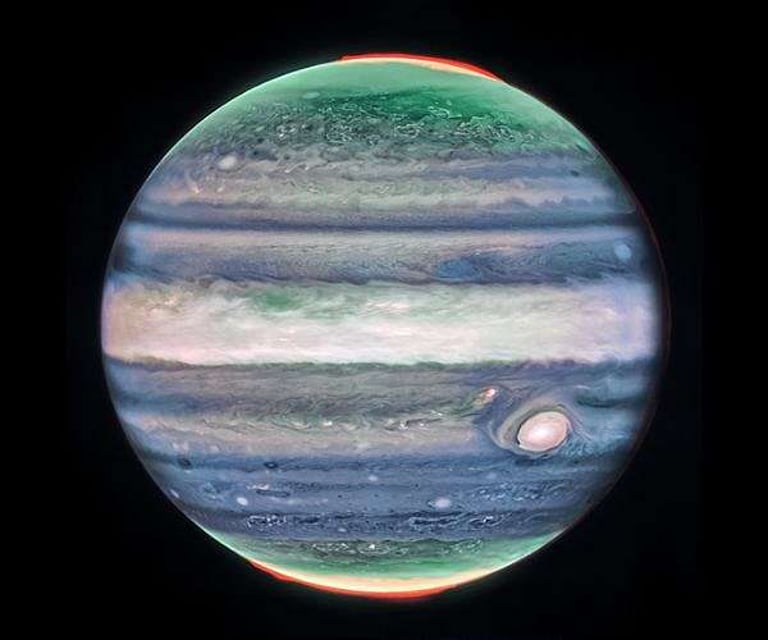

Researchers at the University of Minnesota Twin Cities, in collaboration with other institutions, have discovered a new type of plasma wave in Jupiter's aurora using data from NASA's Juno spacecraft during its low polar orbit over the planet's north pole.
This mission enabled the first detailed analysis of Jupiter's northern polar regions, which are not visible to the naked eye and require UV and infrared observations, providing new insights into the planet's auroral phenomena.
The discovery marks the first time data from Jupiter's north pole has been analyzed, offering valuable information about the planet's magnetic environment and auroras.
The research team, including scientists from the University of Minnesota, University of Iowa, and the Southwest Research Institute, published their findings in 2025, highlighting significant advancements in planetary science.
Scientists such as Professors Robert Lysak and Ali Sulaiman, along with Sadie Elliott and other collaborators, plan to continue gathering data as Juno's mission progresses to further explore these phenomena.
This discovery enhances our understanding of 'alien auroras' on other planets and offers insights into Earth's magnetic field protection against solar radiation, with findings published in Physical Review Letters.
The research deepens our knowledge of planetary magnetospheres and could inform future studies of auroras and magnetic environments on other celestial bodies.
The study indicates that Jupiter's magnetic field causes particles to flood into the polar cap, creating a different auroral pattern compared to Earth's, which forms a donut shape around the poles, and the team aims to gather more data for further investigation.
The observed plasma waves are characterized by very low frequency due to Jupiter's low-density polar plasma and strong magnetic field, differing significantly from Earth's auroral plasma waves, as detailed in the published research.
Summary based on 2 sources
Get a daily email with more Science stories
Sources
Phys.org • Aug 24, 2025
Alien aurora: Researchers discover new plasma wave in Jupiter's aurora