Germany's Bürgergeld Soars to €46.9 Billion Amidst Debate on Refugee Support and Social Security
August 3, 2025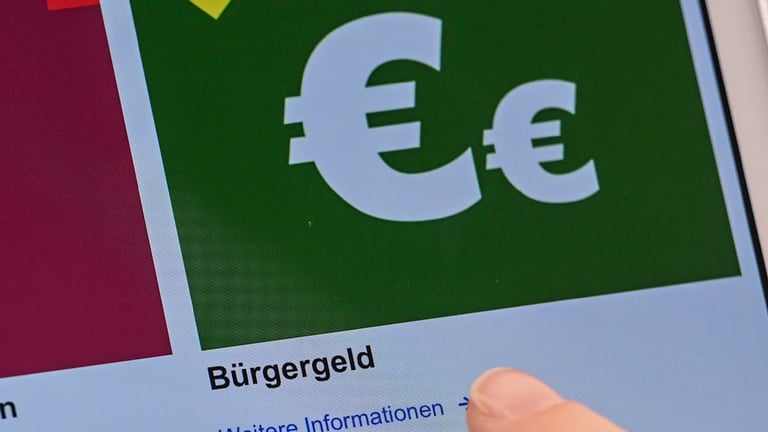

In 2024, Germany's B rgergeld program saw payments rise to 46.9 billion euros, marking an increase of approximately four billion euros from the previous year, as reported by the Federal Ministry of Labor and Social Affairs.
Of the total B rgergeld payments, 52.6% were distributed to German citizens, while 47.4% went to non-Germans, with significant allocations for Ukrainian refugees and individuals from key asylum countries such as Afghanistan and Syria.
Among the foreign recipients, several hundred thousand Ukrainians and their children, who fled to Germany due to the Russian invasion starting in 2022, received about 6.3 billion euros in 2024.
Approximately 5.5 million individuals, including children and adolescents, received assistance through the B rgergeld program, with nearly four million being employable adults capable of working at least three hours per day.
Experts emphasize the necessity for refugees to receive support for integrating into the labor market, as structural unemployment is costly and should be addressed through investment.
It is argued that nearly half of B rgergeld recipients being foreigners is reasonable, given that refugees often enter the labor market at a disadvantage compared to those already employed in Germany.
Enzo Weber from the Institute for Employment Research noted that the increase in payments is largely due to significant hikes in standard rates in 2023 and 2024 driven by inflation, and he anticipates a stabilization in future spending.
Weber also pointed out a decline in the number of eligible working recipients since late 2024, indicating a potential trend reversal, and emphasized the importance of providing support for refugees to integrate into the workforce more rapidly.
The AfD party has criticized the rising expenditures on B rgergeld, calling for restrictions on foreign access to this support, arguing that costs are escalating uncontrollably.
The German Trade Union Confederation and the Social Association Germany criticized the AfD's exclusionary rhetoric, emphasizing the necessity of immigration and the right to social security for all individuals in need.
Marc Biadacz from the Union party viewed the increase in expenditures as a wake-up call, urging for reforms in the basic income system to focus on work and effective job placement.
Summary based on 5 sources