New Study Uncovers Key Role of Neutrophils in Bone Metastases and Potential Cancer Therapy Breakthrough
August 7, 2025

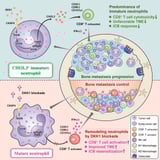
In mouse models of triple-negative breast cancer with bone metastases, blocking DKK1 with specific antibodies restored neutrophil function and improved the anti-tumor activity of CD8+ T cells, resulting in significant tumor regression.
A recent study by Ludwig Cancer Research has uncovered that neutrophils in bone metastases are reprogrammed into an immature state, which contributes to immune resistance against cancer therapies, particularly immunotherapy.
Researchers Taha Merghoub and Tao Shi identified that the protein DKK1, produced by bone metastases, plays a crucial role in this immunosuppressive process.
The study found that the presence of DKK1 leads to functional immaturity in neutrophils, suppressing their ability to mount anti-tumor immune responses.
Additionally, the study suggests that CHI3L3 and its associated gene expression profile could serve as biomarkers for selecting treatments for patients experiencing neutrophil-mediated immune suppression.
These biomarkers may help identify patients with high levels of neutrophil-mediated immune suppression, enabling more tailored cancer treatment strategies.
Elevated levels of DKK1 were detected in patient data from gastric cancer patients with bone metastases, indicating the relevance of these findings in human cases.
The research also analyzed serum samples from patients, confirming increased levels of DKK1 in those with gastric cancer and bone metastases, which could aid in treatment stratification.
The study highlights potential therapeutic strategies targeting DKK1 and reprogramming neutrophils to enhance the effectiveness of existing immune checkpoint blockade therapies.
These findings suggest that DKK1-blockade could represent a promising combination treatment for bone tumors, which currently lack effective therapies.
The study emphasizes the complex roles of neutrophils in cancer, noting that while immature forms are linked to poor prognosis and immune suppression, mature forms can actually support anti-tumor responses.
Furthermore, immature neutrophils produce CHI3L3, which disrupts the activation of cytotoxic T cells, essential for targeting and killing cancer cells.
Summary based on 5 sources
Get a daily email with more Science stories
Sources
Medical Xpress • Aug 7, 2025
Bone metastases cultivate immature immune cells to resist immunotherapy
Newswise • Aug 7, 2025
Bone metastases cultivate immature immune cells to resist immunotherapy | Newswise
News-Medical • Aug 7, 2025
DKK1 identified as key driver of immune resistance in bone metastases
Mirage News • Aug 7, 2025
Bone Metastases Foster Immune Resistance to Therapy