New Study Links Epigenomic Deterioration to Alzheimer's Progression, Unveils Potential Therapeutic Targets
September 2, 2025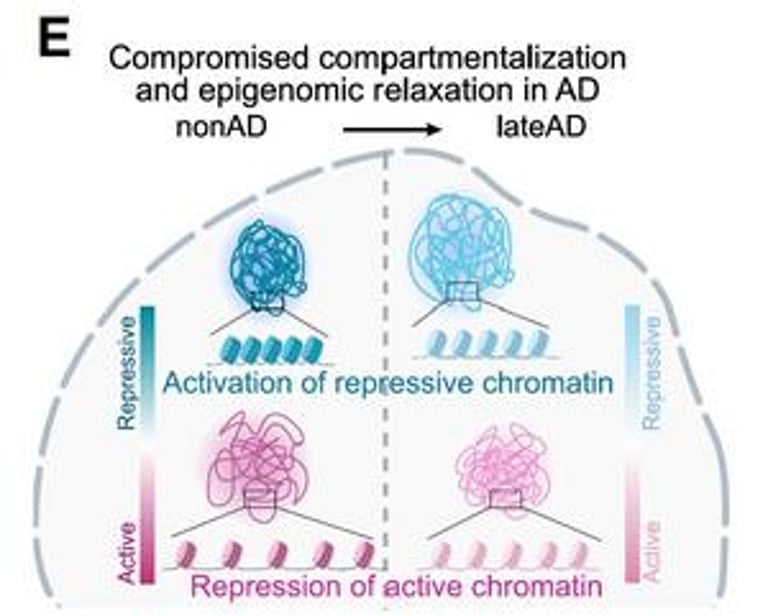

Recent research reveals that neurons expressing the RELN gene and its protein Reelin experience early and severe epigenomic loss, but those maintaining epigenomic integrity show greater resilience against cognitive decline.
Cells with compromised chromatin regulation, called 'chromatin guardians,' display increased accessibility in repressive regions and express genes associated with inflammation and oxidative stress in advanced Alzheimer’s.
These epigenomic deteriorations lead to heightened activity of disease-related genes, directly linking genome regulation collapse to cognitive decline.
A comprehensive study published in Cell by MIT researchers emphasizes that Alzheimer’s disease impacts gene regulation and expression in brain cells, highlighting the importance of epigenomic control in disease progression and cognitive resilience.
The research shows that vulnerable cells in memory regions like the hippocampus lose nuclear compartmentalization and epigenomic information as Alzheimer’s advances, suggesting the disease fundamentally involves the erosion of nuclear order and genome regulation.
Two main patterns of epigenomic deterioration have been identified: disruption of nuclear organization leading to inappropriate DNA accessibility, and a loss of epigenomic information that impairs cellular identity and function.
The study uncovered over 1 million gene-regulatory regions that change accessibility during disease progression, with normally repressed regions becoming accessible and promoting harmful gene expression.
These insights point toward potential therapeutic targets focused on preserving epigenomic integrity to slow or prevent disease progression.
Genetic risk factors like the APOE4 variant play a significant role, initially triggering microglial activation, but later causing epigenomic destabilization and cell degeneration, especially in individuals with two copies of the gene.
The APOE4 allele influences epigenomic stability through dynamic changes: early compensatory microglial regulation followed by steep declines as Alzheimer’s progresses, which may explain the high risk associated with this genotype.
Overall, APOE4 destabilizes the genome, accelerating cell degeneration and highlighting the genetic component in epigenomic deterioration.
Summary based on 5 sources
Get a daily email with more Science stories
Sources
EurekAlert! • Sep 2, 2025
Alzheimer’s erodes brain cells’ control of gene expression, undermining function, cognition
Medical Xpress • Sep 2, 2025
Alzheimer's erodes brain cells' control of gene expression, undermining function and cognition
News-Medical • Sep 2, 2025
Epigenomic erosion linked to cognitive decline in Alzheimer’s patients
Neuroscience News • Sep 2, 2025
Alzheimer’s Linked to Epigenomic Breakdown, Not Just Plaques