Northwestern Pamirs Glaciers Hit Critical Decline, Threatening Central Asia's Water Security
September 2, 2025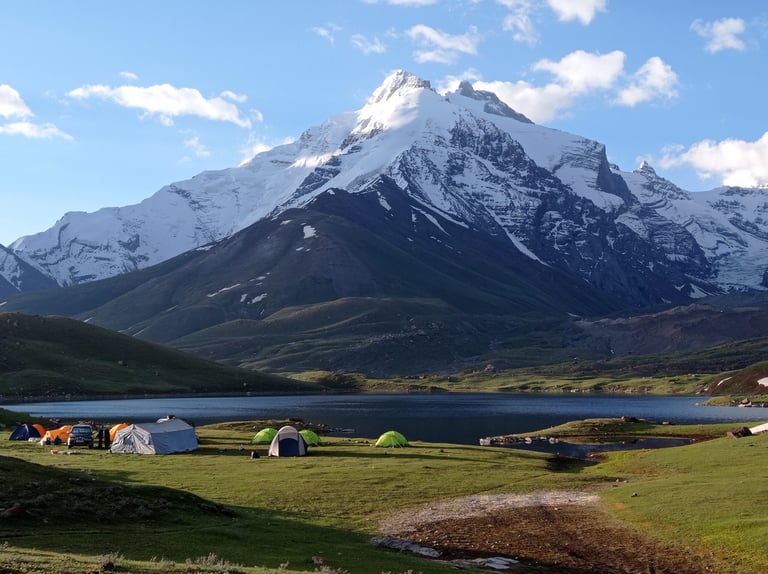

Recent research from the Institute of Science and Technology Austria (ISTA) reveals that the last resilient glaciers in the Northwestern Pamirs of Tajikistan are showing signs of decline, primarily due to decreased snowfall, with data indicating a critical tipping point around 2018.
The study highlights that glaciers in the High-Mountain Asia region, known as the 'Third Pole,' are also experiencing declining stability because of reduced snowfall, which threatens their role as vital water sources.
Data collected from 1999 to 2023 shows that the health of glaciers in the Pamir Mountains has significantly deteriorated since 2018, with snowfall decreasing markedly and snowpack melting earlier in spring.
Climate modeling and local observations suggest that since 2018, reduced snowfall has significantly impacted glacier health, with meltwater only compensating about a third of the water loss, accelerating glacier retreat.
The decline in snowfall has caused a reduction in glacier mass balance, shifting from near-neutral conditions between 1999 and 2018 to a markedly negative balance from 2018 onward, indicating ongoing glacier deterioration.
This reduction in snowfall has also led to decreased runoff from spring snowmelt, increasing reliance on summer ice melt, which threatens regional water availability.
The study involved extensive fieldwork, collaboration with local scientists and communities, and efforts to automate monitoring, ensuring sustainable data collection and local capacity building.
Researchers identified 2018 as a significant 'tipping point,' marking the start of increased ice melt and the beginning of irreversible glacier decline, with potential long-term impacts on regional water resources.
The findings, published in Communications Earth & Environment on September 2, 2025, underscore the urgent need to understand and address climate change impacts on these critical glaciers.
Despite the possibility of future increased precipitation, the current trend of glacier decline and reduced snowfall presents a complex challenge for regional climate resilience and water management.
The glaciers in the Pamir region contribute significantly to the water supply of the Amu Darya River, which feeds into the shrinking Aral Sea, but increased melting is unlikely to replenish the sea's remaining water.
The accelerated melting raises concerns about water security in Central Asia, especially since the Amu Darya basin is a crucial but increasingly stressed water resource.
Summary based on 4 sources
Get a daily email with more Science stories
Sources
EurekAlert! • Sep 2, 2025
The tipping of the last resilient glaciers
Interesting Engineering • Sep 2, 2025
‘Water towers’: Less snow shaking foundations of world’s most resilient glaciers
SSBCrack News • Sep 2, 2025
Decline in Snowfall Threatens Glaciers in Central Tajikistan's Northwestern Pamirs, New Study Reveals -