MIT's SCIGEN AI Revolutionizes Quantum Material Discovery, Paving Way for Advanced Technologies
September 22, 2025


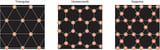
MIT researchers have developed a new AI-guided technique called SCIGEN that designs materials with specific geometric structures linked to exotic quantum properties, potentially accelerating quantum materials discovery.
Using SCIGEN combined with DiffCSP, the team generated over ten million candidate lattice structures, narrowing down to about one million stable options, and further analyzing 26,000 structures through high-fidelity simulations, leading to the synthesis of two new compounds, TiPdBi and TiPbSb, which confirmed their predicted magnetic properties.
While the method reduces the proportion of stable materials, it broadens the pool of promising candidates, highlighting the importance of targeted structural design in advancing materials science.
Despite the promising AI-driven approach, experimentation remains essential to verify the properties of these materials, and future iterations may incorporate additional constraints like chemical and functional criteria to refine the design process.
The broader implications of SCIGEN extend into fields such as biomedicine and clean energy, with potential applications including designing antibiotics against resistant bacteria, demonstrating its cross-disciplinary potential.
Experts believe this tool can significantly speed up the search for next-generation electronic, magnetic, and optical materials, although further experimental validation is necessary.
The development of tools like SCIGEN is part of a larger trend to democratize materials discovery, enabling more precise and accelerated innovation crucial for sustainable technologies and industry competitiveness.
Future improvements to SCIGEN could include additional design constraints related to chemical composition and functional properties, making it more versatile for comprehensive materials discovery.
While lab validation remains important, this approach accelerates the identification of promising structures, potentially leading to new materials for quantum computing and advanced technologies.
The approach significantly expands the number of potential quantum materials, providing experimentalists with hundreds or thousands of candidates to speed up the development of materials for quantum technologies.
The study was funded by the U.S. Department of Energy and the National Science Foundation, utilizing supercomputing resources at Oak Ridge National Laboratory, with findings published in Nature Materials.
The collaborative effort involved multiple institutions, including MIT, Emory University, Michigan State University, Princeton University, and Drexel University, emphasizing an interdisciplinary approach to quantum materials research.
Summary based on 8 sources
Get a daily email with more AI stories
Sources
Phys.org • Sep 22, 2025
New tool steers AI models to create materials with exotic quantum properties
MIT News | Massachusetts Institute of Technology • Sep 22, 2025
New tool makes generative AI models more likely to create breakthrough materials
WebProNews • Sep 22, 2025
MIT’s SCIGEN Tool Boosts AI for Stable Quantum Materials Design
Technology Networks • Sep 22, 2025
New Tool Makes Generative AI Models More Likely To Create Breakthrough Materials