Ancient Ocean Found on Mars: Evidence of Coastlines and Fan Deltas Suggests Blue Planet History
January 12, 2026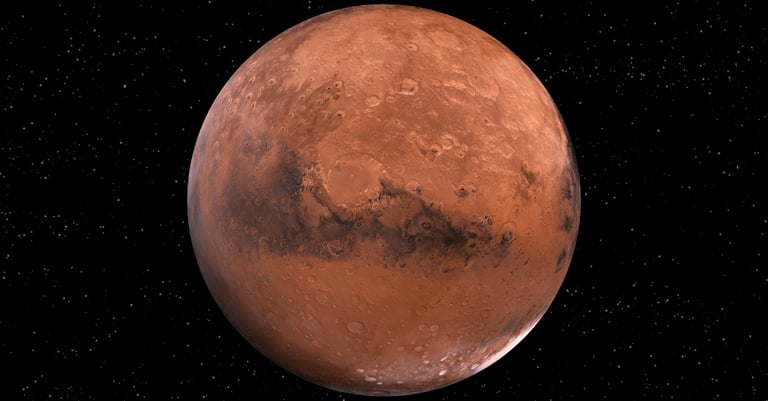

Researchers interpret the scarp-fronted deposits as fan deltas formed where rivers entered a standing body of water, providing clear evidence of a coastline and an ancient ocean on Mars.
Martian river deltas resemble Earth’s fan deltas at the edge of Valles Marineris, indicating rivers flowed into an ancient Martian ocean about three billion years ago.
A team from the University of Bern and the INAF – Osservatorio Astronomico di Padova presents evidence that Valles Marineris contains delta-like coastal structures, signaling an ocean and coastline on Mars around three billion years ago.
CaSSIS has provided high-resolution color images since 2018, contributing to this and other studies, with support from the Swiss Space Office, ESA, ASI, INAF, and the Polish Space Research Centre.
The study, led by Ignatius Argadestya (University of Bern) and Fritz Schlunegger, was published in npj Space Exploration (2026) and uses Earth–Mars depositional environment comparisons through a sedimentological approach.
Key researchers include Ignatius Argadestya, a Ph.D. student at the University of Bern, and Fritz Schlunegger, a professor there; the study is led by Argadestya and published in npj Space Exploration (2026).
Future work will examine mineralogical composition and weathering of ancient Martian soils to better understand past environmental conditions.
High-resolution CaSSIS imagery from the ExoMars Trace Gas Orbiter, along with Mars Express and Mars Reconnaissance Orbiter data, enabled detailed mapping of southeast Coprates Chasma to identify fan-delta–like structures at the edge of mountainous terrain.
The findings support that ancient Mars could have supported life, reflecting a transition from wetter, potentially habitable conditions to today’s dry climate.
Overall, these results reinforce the view that early Mars had substantial surface water and a climate that could have been hospitable to life, suggesting Mars was once a blue planet.
Researchers estimate the ancient ocean was at least as large as Earth's Arctic Ocean and stretched across Mars’ northern hemisphere, marking the deepest and largest former ocean discovered on the planet.
Coastline reconstructions imply a sea covering a vast northern region, reinforcing the scale of the former Martian ocean.
Summary based on 2 sources
Get a daily email with more Science stories
Sources
Phys.org • Jan 12, 2026
Mars was once a 'blue planet': Ancient river deltas point to vast ocean
Media Relations
Mars was half covered by an ocean