Woolly Rhino Genome from Wolf Stomach Reveals Climate-Driven Extinction, Not Human Hunting
January 14, 2026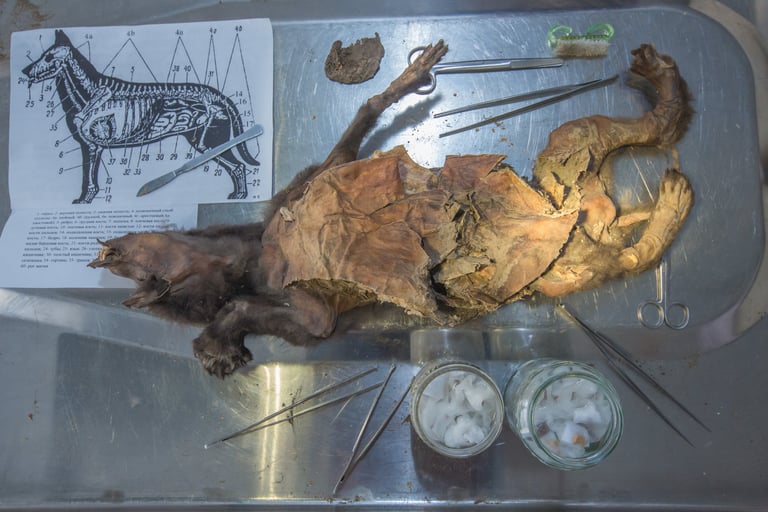

Researchers conclude the extinction was likely rapid and driven by climate warming rather than human hunting.
A woolly rhinoceros genome was recovered from tissue found in the stomach of an ice-age wolf buried in Siberian permafrost, enabling a genomic analysis of the rhino.
The study, led by J. Camilo Chacón-Duque and colleagues, was published in Genome Biology and Evolution; researchers note population-level data are scarce due to few young rhino specimens.
The new evidence contrasts with earlier genomes from around 18,400 years ago that suggested a healthy population, indicating a swift decline for woolly rhinos in northeastern Siberia during the late Ice Age.
Future work will focus on further analyzing the recovered data and applying the techniques to other difficult specimens, acknowledging the scarcity of young samples.
The study demonstrates the feasibility of reconstructing an entire genome from DNA preserved in an animal’s stomach, opening avenues for future genomic work from indirect sources.
The sample is among the youngest woolly rhino specimens found and presents challenges due to degraded ancient DNA and predator DNA contamination.
An effective population around 1,600 would have been sufficient to avoid major genetic problems, though small populations remain vulnerable to environmental change, disasters, and disease.
Leading researchers include Camilo Chacón-Duque and Sólveig Guðjónsdóttir, highlighting the importance of recovering genomes from extinct species near their extinction events.
Recovering genomes from unusual contexts, such as a predator's stomach, can shed light on mating patterns, population dynamics, and extinction drivers relevant to conservation.
Results showed a surprisingly stable genetic pattern over tens of thousands of years, with no clear signs of inbreeding despite small population sizes.
The findings imply climate changes at the end of the last Ice Age likely triggered the extinction, offering historical context for current conservation concerns.
Summary based on 7 sources
Get a daily email with more Science stories
Sources

The Guardian • Jan 14, 2026
Wolf’s dinner preserved in Siberia for 14,400 years sheds light on woolly rhino
Ars Technica • Jan 14, 2026
Scientists sequence a woolly rhino genome from a 14,400-year-old wolf’s stomach
Gizmodo • Jan 14, 2026
You Won’t Believe Where Scientists Found a 14,400-Year-Old Woolly Rhino Genome
Phys.org • Jan 14, 2026
Woolly rhino genome recovered from Ice Age wolf stomach