UN Report Warns of Global Water Bankruptcy: 4 Billion Face Scarcity, Urgent Action Needed
January 20, 2026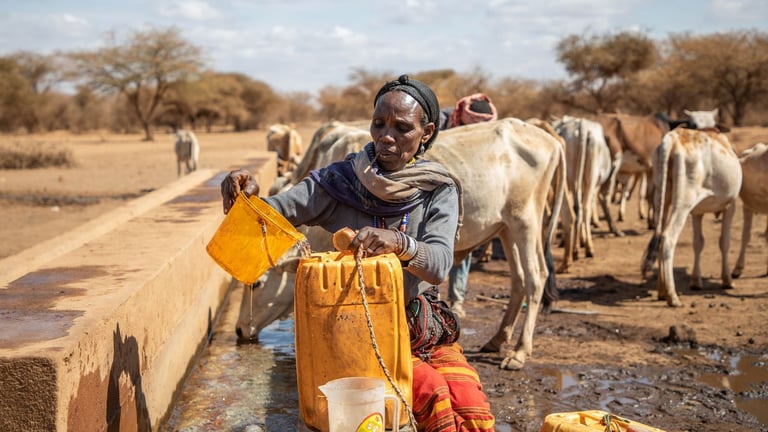


Water is framed as a potential shared resource capable of bridging political divides if managed cooperatively, shifting from firefighting to long-term recovery and resilience.
Officials emphasize that protecting water resources underpins broader environmental and security goals and must be treated as a policy priority.
A core recommendation is comprehensive water accounting and metering accompanied by integrated management to reduce consumption and support economic diversification for affected communities.
A just and sustainable response is needed, recognizing that burdens fall on small farmers, Indigenous peoples, low-income urban residents, women, and youth, while benefits accrue to more powerful actors.
A United Nations University report warns we are entering an era of global water bankruptcy, with irreversible losses in freshwater reserves and overextraction from rivers, soils, groundwater, and glaciers.
Scale and impacts are dire: about 4 billion people face severe water scarcity for at least one month each year, leading to dry reservoirs, sinking cities, crop failures, water rationing, and more frequent and intense droughts.
Global indicators show half of large lakes have declined since the 1990s, groundwater supplies provide half of domestic water, more than 40% of irrigation water comes from draining aquifers, 70% of major aquifers are in long-term decline, and 410 million hectares of wetlands have disappeared, leaving billions insecure about water and sanitation.
The report stresses immediate action: addressing the problem early preserves options and adaptation paths rather than letting a crisis escalate.
Experts caution that increasing agricultural efficiency alone may not cut consumption and could raise use unless paired with demand reductions and economic diversification for farming-dependent livelihoods.
Practical government priorities include preventing irreversible damage, rebalancing water rights to fit carrying capacity, supporting just transitions for affected communities, transforming water-intensive sectors, and building institutions capable of continuous, threshold-based management.
Investing in water is framed as funding climate mitigation, biodiversity protection, and desertification control, with a focus on a just transition to shield vulnerable communities.
Lead author Kaveh Madani highlights four core points: safeguard the hydrological cycle and natural capital; shared water crosses borders and can foster cooperation; investing in water mitigates climate change, biodiversity loss, and desertification; and renewed focus can accelerate negotiations and align local needs with global goals.
Summary based on 15 sources
Get a daily email with more World News stories
Sources

The Guardian • Jan 20, 2026
Era of ‘global water bankruptcy’ is here, UN report says
Yahoo News • Jan 20, 2026
The world is in water bankruptcy, UN scientists report – here’s what that means
Scientific American • Jan 20, 2026
World has entered an era of ‘global water bankruptcy,’ U.N. warns