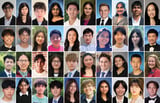
Regeneron Science Talent Search 2026 Unveils Top 40 Finalists, Boosts Prizes to $1.8 Million
January 21, 2026

The Regeneron Science Talent Search 2026 has named its top 40 finalists from 35 schools across 15 states, with more than $1.8 million in prizes and a top prize of $250,000 to support the finalists’ education.
Finalists were selected from 2,600 entrants based on originality, creativity, achievement, and leadership inside and outside the classroom.
Regeneron is committing to the program for a decade with $100 million, substantially increasing annual awards and the top prize to accelerate support for top entrants.
The event sits in the program’s 85-year history, with an emphasis on the March 8 public project exhibition and the March 10 awards ceremony.
Society for Science, a nonprofit behind Science News and STEM outreach, partners with Regeneron to run the competition and emphasize STEM-Fueled initiatives and corporate responsibility.
Finalist projects span a wide range of disciplines, including neuroscience, environmental science, machine learning, social science, cancer biology, autoimmune disorders, geriatrics, and computational methods.
Westchester participants are highlighted with detailed project work, illustrating broad regional engagement in high-level science.
Quotes underscore the program’s impact on young scientists and Regeneron’s mission to nurture scientific leadership, reflecting the STS legacy and the roles of Society for Science and Regeneron.
Resources include links to finalists, scholars, notable alumni, and an STS overview, along with media contacts for Society for Science and Regeneron.
Official materials provide links to the Regeneron STS finalists, top 300 scholars, and Society for Science pages for more information.
This 85th edition continues the tradition of spotlighting exceptional young scientists, with alumni achievements from Nobel laureates to founders of science-driven companies.
The collaboration between Society for Science and Regeneron frames the competition as a national stage for original research and scientific leadership.
Summary based on 5 sources