AI Designs Virus to Destroy E. coli, Signaling New Era in Synthetic Biology
January 25, 2026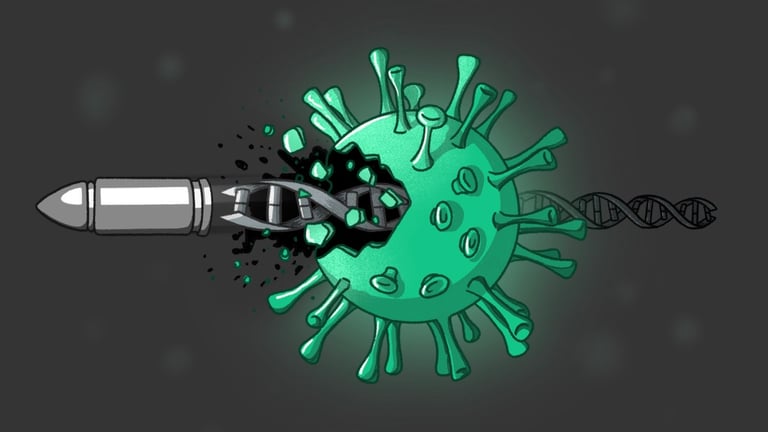


There is a notable push toward synthetic human genomes through ongoing projects like the Synthetic Human Genome Project, with Oxford-based researchers contributing to wider genome-synthesis efforts.
The work signals a shift toward post-Darwinian biology where life could be authored rather than merely evolved, fueling discussions about creating new species and the future of life on Earth.
Industry leaders, including a Moderna figure, describe the development as a remarkable advance with potential applications across medicines, materials, and more, emphasizing AI-guided DNA design’s transformative possibilities.
A breakthrough in synthetic biology shows AI designed and synthesized a complete virus genome, Evo-Δ2147, capable of destroying E. coli in lab conditions, marking the first full genome designed from scratch rather than edited.
The AI system Evo2 designed 285 new viruses from a wild-type phage, with 16 able to attack E. coli and one significantly faster, illustrating rapid generation of novel genomic sequences.
Stanford researchers achieved a breakthrough by using AI to design the genetic code of a brand-new organism, demonstrating an AI-designed virus that attacks E. coli in a petri dish.
Genyro, a company founded by Adrian Woolfson, collaborates with top genetic designers to advance AI-driven genome design and synthetic biology applications.
Genyro’s team, including scientists such as Brian Hie, Kaihang Wang, and Noah Robinson, aims to commercialize AI-designed genetics for therapies, vaccines, and materials, potentially enabling personalized vaccines and faster production timelines.
Sidewinder, a DNA construction tool from Caltech, acts as a precise DNA ‘printing press’ that orders and assembles sequences more accurately, quickly, and cheaply, aided by an algorithm that optimizes coding page numbers for correct assembly.
Complementary Caltech work introduces Sidewinder’s capability to construct long genetic sequences with dramatically improved accuracy, speed, and cost efficiency, enhancing genome assembly.
Ethical considerations center on potential designer enhancements and germline edits, with calls for governance to protect human rights and prevent non-medical enhancements, alongside a proposed responsible-use manifesto and moratorium on certain synthetic-human experiments.
Experts foresee transformative applications in vaccines, cancer immunotherapies, and antibiotics (e.g., targeting Pseudomonas in cystic fibrosis), with broader potential impacts on materials, textiles, and agriculture.
Summary based on 2 sources
Get a daily email with more AI stories
Sources

The Sunday Times • Jan 24, 2026
Welcome to post-Darwinism: AI fires silver bullet for creating new life