OpenAI's Prism: Revolutionizing Scientific Research with AI-Powered Workspace, Sparking Debate on Quality and Reliability
January 27, 2026


Future developments teased include Autonomous Labs for experimental execution and expanded multi-agent 'swarm intelligence,' with emphasis on addressing the validation gap to ensure AI-generated claims reflect physical reality.
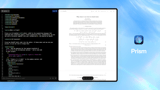
OpenAI has launched Prism, a free AI-powered workspace for scientists and researchers built on GPT-5.2, designed to streamline drafting, LaTeX, citations, and real-time collaboration in one interface.
Prism enables deep-context reasoning for manuscript development, helping users understand the structure of papers, figures, and references, and it allows refactoring of equations or citations without losing overall logic.
Prism is currently available on the web to users with a ChatGPT personal account, with plans to expand to ChatGPT Business, Enterprise, and Education soon.
Industry coverage notes concerns about AI in research, including the quality of AI-generated outputs, strain on peer review, and examples of questionable AI-generated content.
Reactions from industry and academia are mixed: praise for collaboration features, but warnings about over-reliance on AI for hypothesis testing and the risk of misinformation in technical fields.
A key feature called 'Citation Lock' restricts AI to claims supported by uploaded documents or verified databases to reduce hallucinations and improve verifiability.
Public perception risks are highlighted, including claims that AI can push the boundaries of quantum physics without guaranteeing real discoveries.
OpenAI frames frontier models as aids for proofs and hypothesis testing in theoretical domains, while acknowledging the need for verification and responsible deployment.
The release signals a broader shift toward automating scientific workflows, potentially democratizing access to advanced research tools while demanding rigorous verification and governance.
Article reported by News.Az and authored by Ulviyya Salmanli.
Berkeley Haas and Cornell researchers found AI-assisted work can boost output up to 50% but with diminished scientific merit as complexity grows, while human-written work remains higher quality.
Summary based on 49 sources
Get a daily email with more Tech stories
Sources
TechCrunch • Jan 27, 2026
OpenAI launches Prism, a new AI workspace for scientists
ZDNET • Jan 27, 2026
Meet Prism, OpenAI's free research workspace for scientists - how to try it
MIT Technology Review • Jan 27, 2026
OpenAI’s latest product lets you vibe code science