Google DeepMind's AlphaGenome AI Revolutionizes DNA Mutation Predictions for Medical Breakthroughs
January 28, 2026


AlphaGenome, Google DeepMind’s new regulatory-genome AI tool, can predict how DNA mutations affect biological processes and disease, potentially accelerating medicine discovery.
It’s trained on extensive public datasets measuring non-coding DNA across hundreds of human and mouse cell types, and is open for non-commercial research use by about 3,000 scientists in 160 countries.
The model analyzes sequences up to a million base pairs, predicting how each nucleotide pair influences cellular processes—from gene start/stop points to RNA production—delivering higher resolution than many prior models.
Experts urge cautious interpretation and note the need for further verification of the claims.
Researchers acknowledge ongoing work to sharpen predictive power and quantify uncertainty in the results.
Feedback from researchers, including Stanford scientists, is optimistic, with expectations that AlphaGenome could impact clinical workflows and pharmaceutical research.
Key validations include predicting cancer-driving mutations and helping interpret variants from large sequencing studies, though accuracy varies by long-range regulatory elements and tissue context.
Future work focuses on improving long-distance gene regulation predictions, tissue specificity, and cross-cell-type accuracy (e.g., neurons vs. heart cells).
AlphaGenome uses a two-stage training approach and delivers fast, robust predictions—under a second per variant on high-end GPUs—through a distilled student model learning from an ensemble of teachers.
Architecturally, it combines a convolutional base-pair analyzer, transformers for refinement, and a final network that outputs molecular property predictions.
DeepMind and collaborators frame AlphaGenome as a research tool for genome-wide association studies and cancer research, stressing cautious interpretation and need for validation.
Summary based on 24 sources
Get a daily email with more Tech stories
Sources

BBC News • Jan 28, 2026
AI model from Google DeepMind reads recipe for life in our DNA
The Guardian • Jan 28, 2026
Google DeepMind launches AI tool to help identify genetic drivers of disease
BBC News • Jan 28, 2026
AI model from Google DeepMind reads recipe for life in our DNA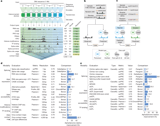
Nature • Jan 28, 2026
Advancing regulatory variant effect prediction with AlphaGenome