Penn State Innovates Hydrogel Power Source Inspired by Electric Eels for Medical Devices and Robotics
January 28, 2026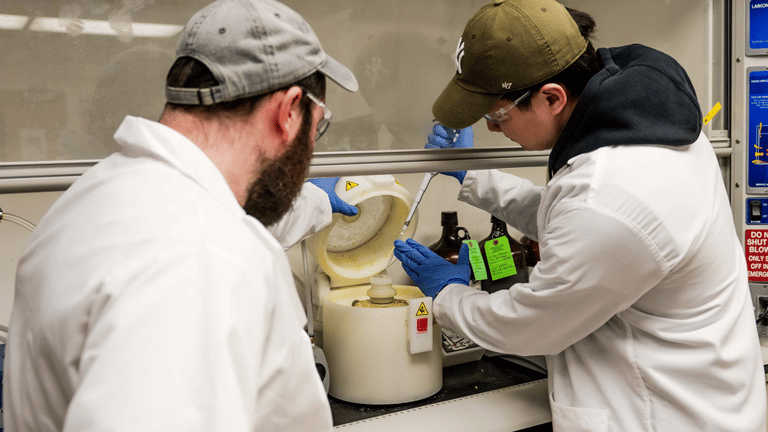

Penn State researchers have developed non-toxic, flexible hydrogel-based power sources inspired by electric eels to power biomedical devices and soft robotics, featuring high power density and environmental stability.
The ultra-thin hydrogel architecture, with each layer around 20 micrometers, yields higher power density than prior designs by reducing internal resistance.
They built a four-layer hydrogel stack, about 20 micrometers thick per layer, produced by spin coating to minimize internal resistance and boost output without external supports.
Spin-coated, nano-thin layers preserve flexibility and biocompatibility while enhancing overall performance.
Future work will seek higher power density, improved recharge efficiency, and potential self-charging capabilities, with broader biomedical and wearable applications.
The study was published in Advanced Science and supported by the Air Force Office of Scientific Research.
Incorporating glycerol enables operation at temperatures as low as minus 80 degrees Celsius and keeps the hydrogel hydrated for days in air, extending durability.
The devices achieve power densities around 44 kW per cubic meter, outperforming earlier hydrogel devices and suitable for implanted sensors, soft robotics controllers, and wearables.
The hydrogel-only power sources are designed to be safe for biomedical environments, functioning without mechanical supports and within biological contexts.
The team emphasizes all-hydrogel, flexible batteries that achieve high power density while remaining non-toxic and biologically stable, suitable for medical devices and soft robotics.
Chemical tuning ensured uniform spreading, mechanical stability, and low resistance during fabrication, addressing issues where conventional formulations would fail on the spinning surface.
This work claims to be the first fully hydrogel-contained power source that requires no external structural support while delivering high power densities and environmental robustness.
Summary based on 3 sources
Get a daily email with more Science stories
Sources

Penn State University • Jan 28, 2026
Electric eel biology inspires powerful gel battery | Penn State University
Tech Xplore • Jan 28, 2026
Electric eel biology inspires powerful gel battery
Mirage News • Jan 28, 2026
Electric Eel Biology Inspires Powerful Gel Battery