Fecal Transplants Enhance Cancer Treatment: New Trials Show Promising Results in Reducing Toxicities
January 28, 2026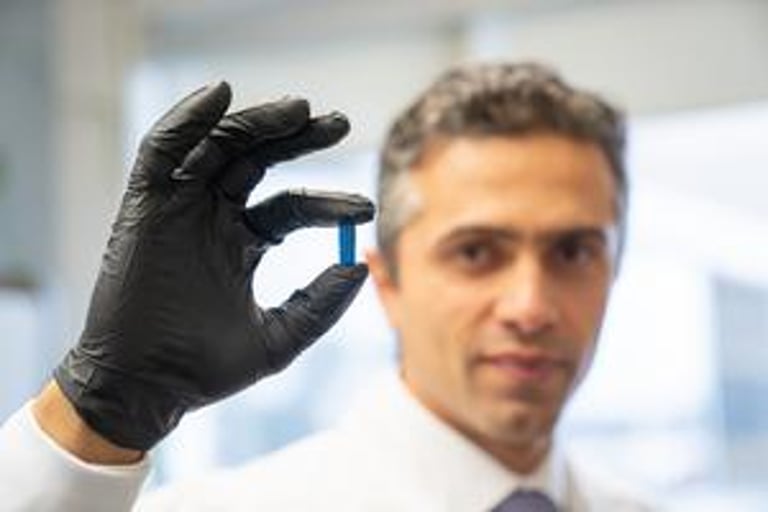

Two Canadian clinical trials published in Nature Medicine demonstrate that fecal microbiota transplants (FMT) can reduce immunotherapy toxicities and improve response rates in cancer treatment.
The research was conducted across multiple institutions—LHSCRI, Lawson, CRCHUM, and CHUM—with collaboration between facilities in London and Montreal.
A Phase I trial at London Health Sciences Centre and Lawson Research Institute found that customized FMT is safe when combined with immunotherapy for advanced kidney cancer, involving 20 patients.
The release includes English and French video interviews and provides contact information for further inquiries.
Funding for the studies comes from the Canadian Cancer Society for the lung/melanoma trial and a mix of sources including the Ontario Institute of Cancer Research, CIHR, AMOSO, Western University, donors, and foundations for the kidney cancer trial.
Key researchers—Saman Maleki (LHSCRI), Dr. Arielle Elkrief and Dr. Rahima Jamal (CRCHUM), among others—highlight the potential to reduce toxicity and improve outcomes.
A broader team includes Saman Maleki, Arielle Elkrief, Dr. Rahima Jamal, Dr. Michael Silverman, Dr. Ricardo Fernandes, and Behnam Jabbarizadeh, with funding from the Canadian Cancer Society, Ontario Institute of Cancer Research, CIHR, and multiple foundations.
Researchers emphasize donor selection and personalized approaches, noting that different donors’ microbiomes may influence outcomes depending on the cancer therapy used.
The studies utilize LND101 fecal transplant capsules and discuss scaling production to broaden patient access.
Public communications feature quotes from principal investigators underscoring the significance and potential to scale FMT capsules for wider use.
Both trials employed LND101 capsules, described as world-leading, and build on prior melanoma work while expanding exploration to pancreatic and triple-negative breast cancers.
The research team includes Dr. Saman Maleki and Dr. Arielle Elkrief, with collaboration among Lawson Research Institute, LHSCRI, and CRCHUM to broaden immunotherapy options for lung, melanoma, and kidney cancers.
Summary based on 9 sources
Get a daily email with more Science stories
Sources
EurekAlert! • Jan 28, 2026
Innovative ‘poop pills’ show promising results in clinical trials for multiple types of cancer
Medical Xpress • Jan 28, 2026
Fecal transplant capsules show promising results in clinical trials for multiple types of cancer
News-Medical • Jan 28, 2026
Poop pills could help cancer patients respond to immunotherapy while reducing toxic side effects
Mirage News • Jan 28, 2026
Poop Pills Show Promise in Cancer Trials