Rejecting British Honours: A Stand Against Imperial Legacy and Symbolic Power
January 5, 2026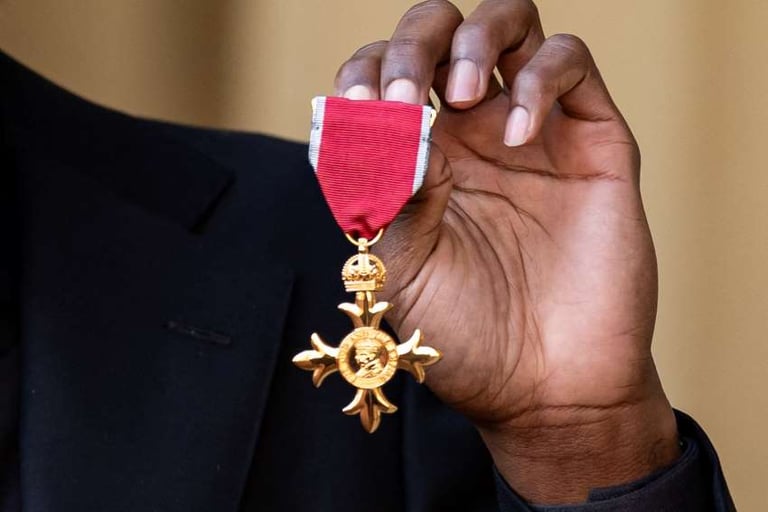

The article argues that British honours like knighthoods and MBEs are not neutral acknowledgements but symbolic continuations of empire, imperial hierarchy, and racialized power rooted in Britain’s colonial history.
Refusal of honours is presented as a coherent political stance—dignity does not require imperial validation, and true liberation cannot come from a system that once denied it.
These refusals are placed within a global anti-colonial tradition, linking actions from India, the Caribbean, Africa, and Ireland to a broader pattern of resisting imperial symbolism.
David Bowie’s rejection of honours is cited as evidence that such recognitions claim proximity to culture rather than liberate it, thereby reinforcing state authority.
For Black communities, accepting honours risks normalising and legitimising a system that historically denied Black humanity and sustained slavery and racial hierarchy across the diaspora.
The Order of the British Empire, established in 1917, is highlighted as the central and explicit manifestation of imperial logic, persisting beyond formal decolonisation.
Historically, refusing honours has been a political act against imperial power, with examples including John Lennon’s 1969 return of his MBE, Benjamin Zephaniah’s 2003 rejection of an OBE, and Rabindranath Tagore’s renunciation of his knighthood in 1919.
The author argues that wearers who present themselves as anti-racist or anti-colonial while accepting honours reveal a contradiction, since representation can mask an unchanged imperial structure.
Windrush-era scandals are used to argue that Britain has never materially addressed empire—no apologies or reparations—making honours a symbolic shortcut that substitutes prestige for justice.
Summary based on 1 source
Get a daily email with more UK News stories
Source
Voice Online • Jan 5, 2026
Why British honours undermine anti-colonial politics