Shanghai Team's Breakthrough Adjuvant Therapy Revolutionizes Triple-Negative Breast Cancer Treatment
January 5, 2026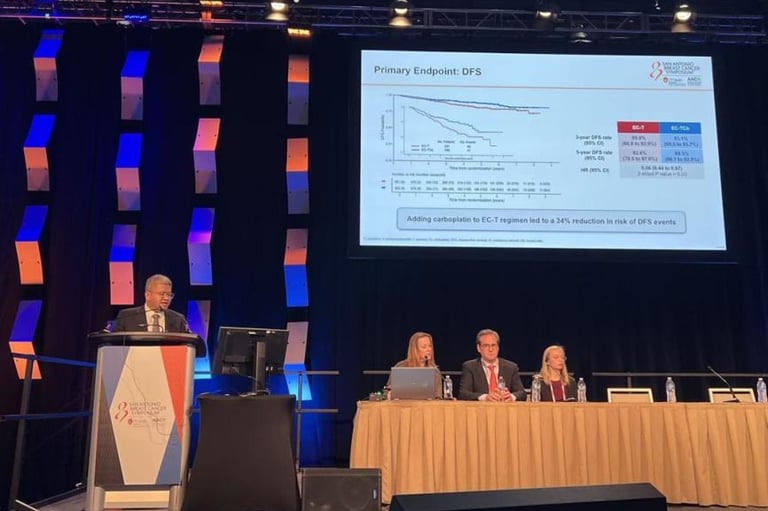

The presentations at the symposium highlighted international relevance and potential to influence global practice guidelines.
In a nationwide Phase III China trial with 786 patients across 19 hospitals, adding carboplatin to standard adjuvant chemotherapy reduced postoperative recurrence by 34% and mortality by 61%, with a three-year disease-free survival of 93.1%.
Triple-negative breast cancer is notably treatment-resistant due to lack of targets and high recurrence/metastasis risk, making effective adjuvant therapies especially impactful.
The China trial reported a three-year disease-free survival of 93.1%, distant metastasis-free survival of 95.2%, and overall survival of 98.3%.
The therapy involves adding carboplatin to the standard adjuvant regimen, driving the substantial reductions in recurrence and mortality.
A Shanghai-based Ruijin Hospital team affiliated with Shanghai Jiao Tong University School of Medicine reported a Phase III, multi-center trial showing a breakthrough in adjuvant therapy for early-stage triple-negative breast cancer.
The team demonstrated significant reductions in recurrence and mortality for this aggressive cancer subtype.
The research began in 2015 and culminated in results from a multinational, multi-center collaboration presented at an influential international conference.
Experts outside China welcomed the findings, suggesting the therapy could reshape global treatment guidelines with robust clinical data.
The trial showed a distant metastasis-free survival of 95.2% and an overall survival of 98.3%, indicating substantial benefit for operable patients.
Findings were presented at the San Antonio Breast Cancer Symposium, underscoring the study as a major advancement in adjuvant therapy for early-stage triple-negative breast cancer.
Summary based on 2 sources