Stunning Chandra Video Reveals 25-Year Expansion of Kepler's Supernova Remnant
January 7, 2026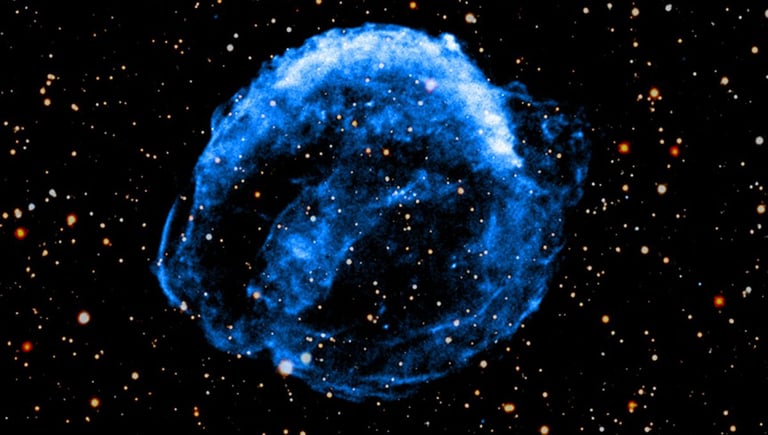

The work was presented by Jessye Gassel at the American Astronomical Society meeting in Phoenix, with NASA’s Goddard Space Flight Center overseeing the Chandra mission and the Chandra X-ray Center managing operations.
The video compresses about a quarter-century of expansion into a 40-second time-lapse, highlighting the ongoing expansion into space.
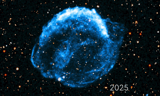
This long-term timelapse, built from Chandra data, captures the afterlife of the Type Ia supernova seen in 1604 by Johannes Kepler.
A new Chandra X-ray Observatory video tracks Kepler’s Supernova Remnant’s evolution over more than 25 years, using data from 2000, 2004, 2006, 2014 and 2025 to show how the remnant expands.
Analysis of the blast-wave rims provides details about the explosion and the surrounding environment, helping scientists understand the physics of the event and how the remnant interacts with its surroundings.
The study is framed within ongoing NASA-Chandra efforts, presenting Kepler’s remnant as a crucial window into how explosive stellar deaths shape their galactic environment.
Led by Jessye Gassel of George Mason University, the team presented the findings at the American Astronomical Society meeting, noting that the sequential data allows near-real-time watching of the remnant’s evolution over centuries.
The researchers emphasized how the remnant’s interaction with surrounding material informs explosion dynamics and environments, in a presentation at the AAS meeting in Phoenix.
Kepler’s supernova (SN 1604) was observed in October 1604 and became the brightest star in the sky, a historic event tied to challenges to Aristotelian cosmology.
X-ray observations reveal the remnant’s debris glowing at millions of degrees, with Kepler located about 17,000 light-years away, enabling detailed time-resolved imaging.
By examining the blast-wave rims, researchers infer the nature of the ambient medium into which the progenitor exploded and the remnant’s evolution within that environment.
The Chandra-based study illustrates the interaction of the remnant with surrounding material and traces its continued expansion.
Summary based on 4 sources
Get a daily email with more Science stories
Sources
NASA • Jan 6, 2026
Supernova Remnant Video From NASA's Chandra Is Decades in Making - NASA
Phys.org • Jan 7, 2026
Supernova remnant video from NASA's Chandra is decades in making
Talker • Jan 7, 2026
NASA captures jaw-dropping scenes of star’s violent death